This post may contain affiliate links. Please read our disclosure policy.
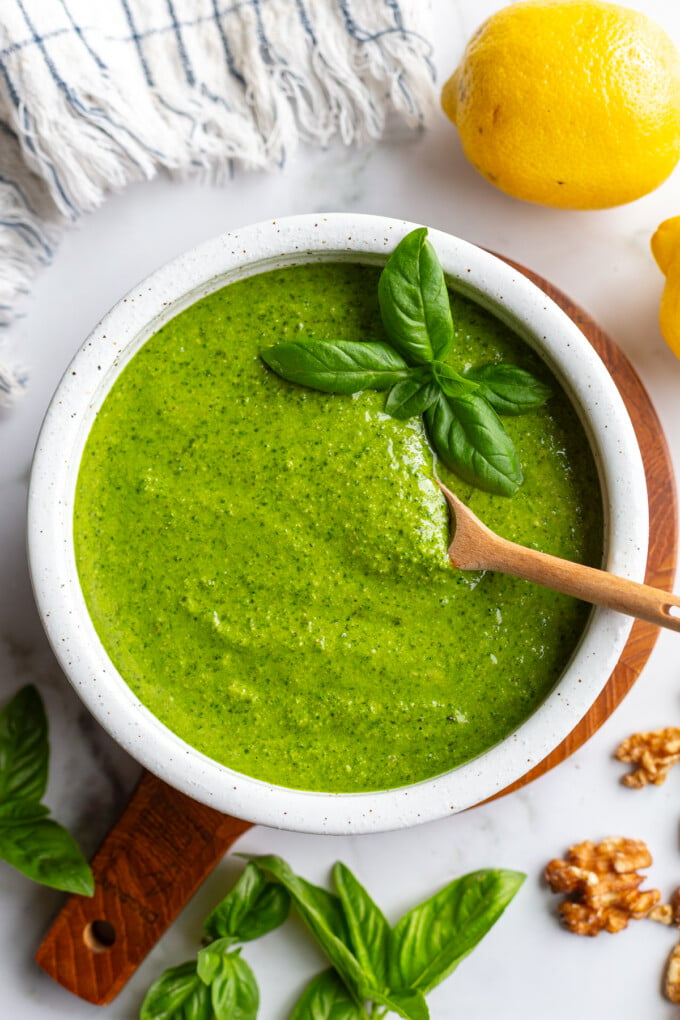
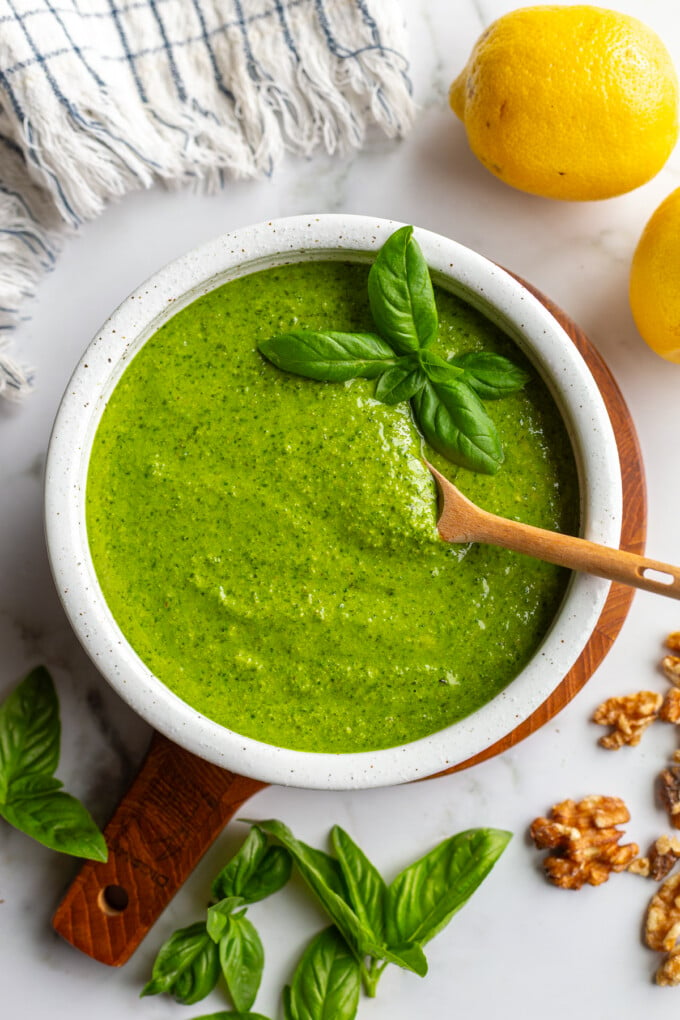
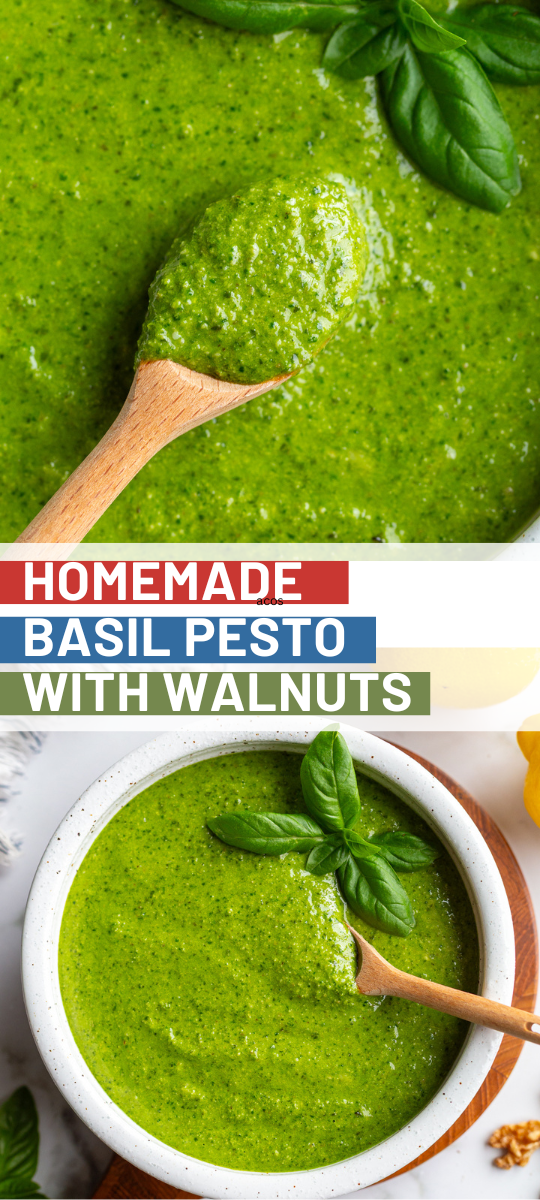
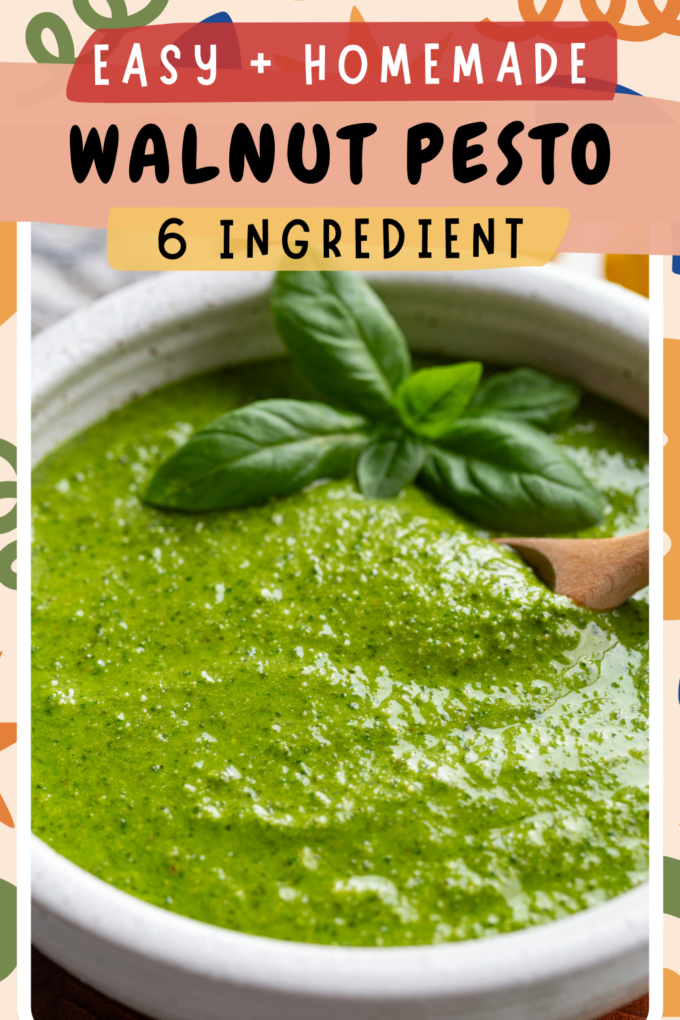
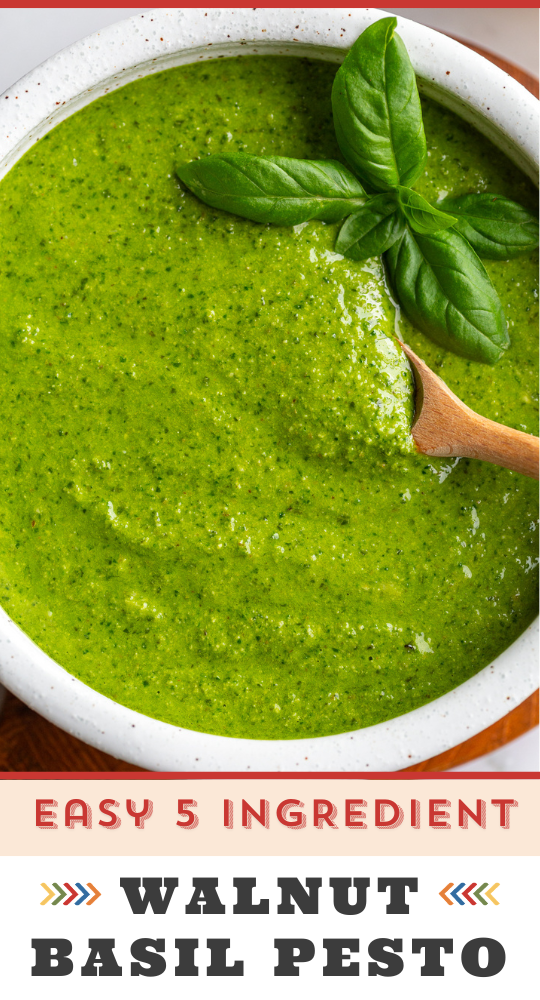
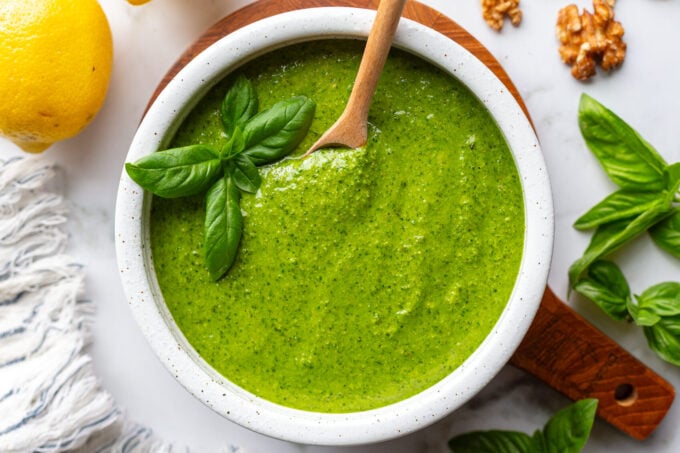
I’m this close to never buying pine nuts again – this walnut pesto is just as rich and garlicky for a fraction of the price. It comes together in one food processor in about 10 minutes flat and is a great option to make pesto without pinenuts!
Love pesto? You need to try my Creamy Pesto Pasta as well as my Classic Basil Pesto Sauce and my Pesto Pasta Salad!
Why you’ll love this basil walnut pesto recipe

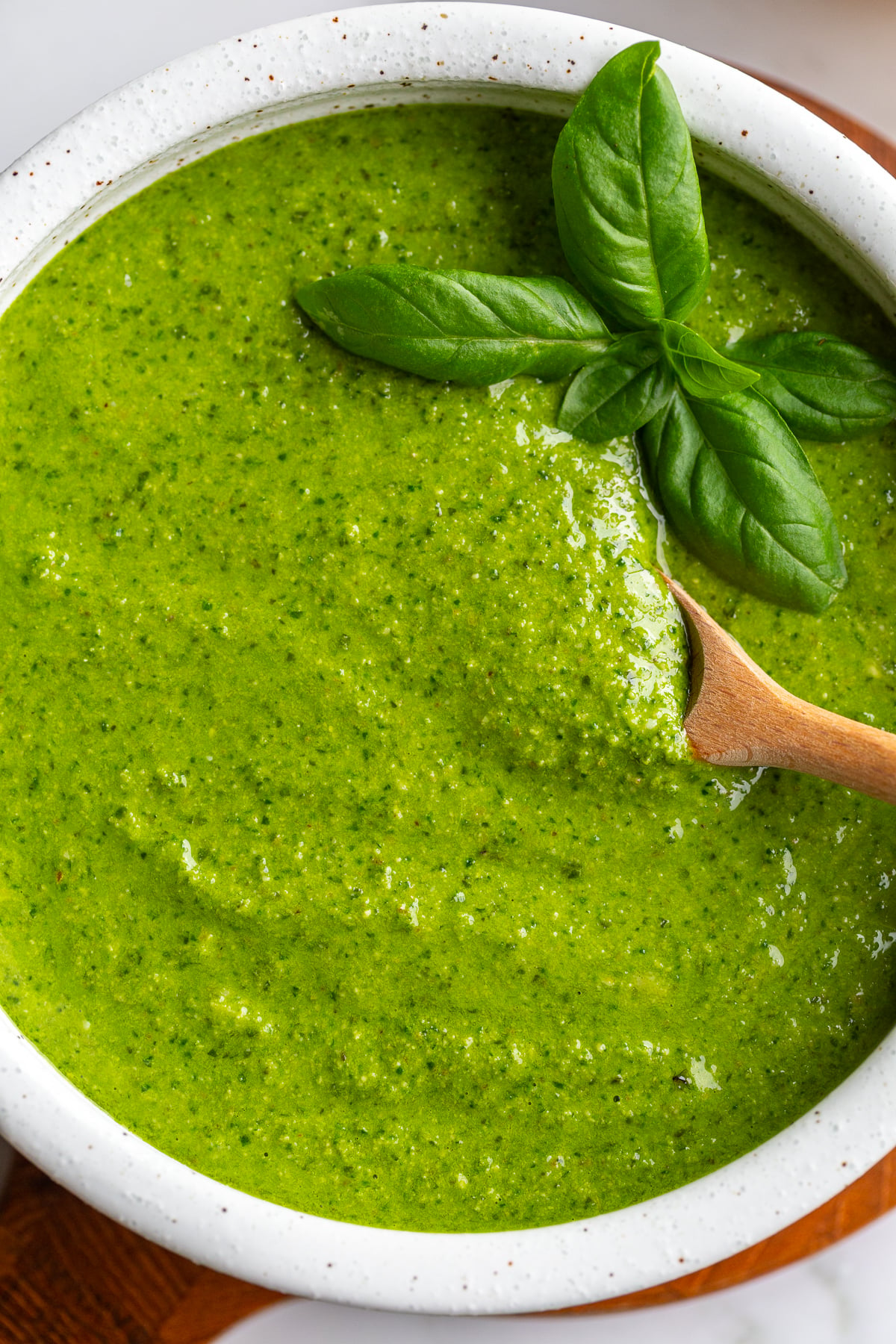
Pesto is one of those things I make on repeat all summer when basil is everywhere and cheap! Walnuts have officially become my go-to nut for it – they blend up just as creamy as pine nuts and I always have a bag of them on hand anyway. Plus, this fresh basil walnut pesto is SO MUCH better than the pesto you find at the grocery store.
And since my wife has an odd aversion to pine nuts, this recipe is perfect for when I NEED some fresh pesto but I also want her to eat it :)
Why You’ll Love This:
- Endlessly versatile sauce – toss it with pasta, spread it on sandwiches, or dollop it on roasted veggies.
- Budget-friendly – walnuts cost a fraction of what pine nuts do.
- Ready in 10 minutes – just a few pulses in the food processor and you’re done.
- No cooking required – everything happens raw, straight in the food processor bowl. Although, toasted walnuts really take this up a notch!
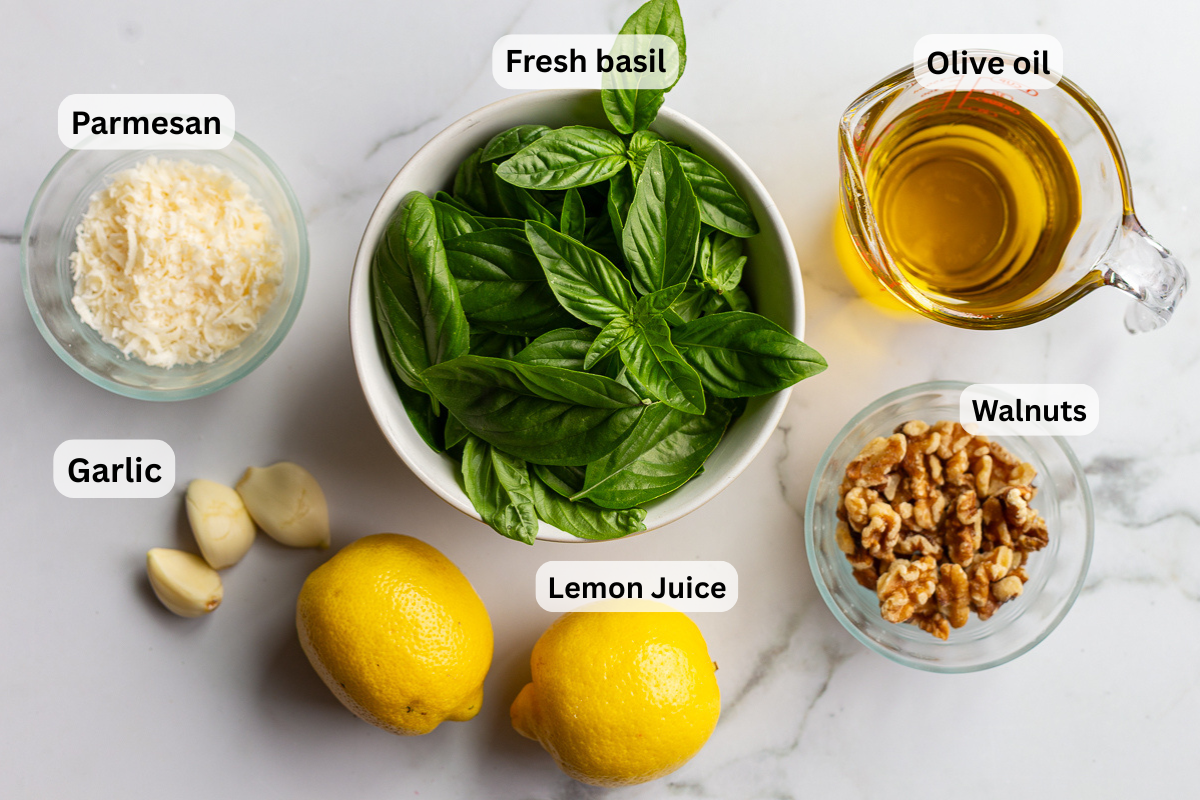
Ingredients needed
The simple ingredients for this simple walnut pesto recipe are listed fully down in the recipe card but let’s briefly go over the pantry staples needed including a few substitutions you can make as desired!
- Walnuts – the base of this pesto instead of the traditional pine nuts; toast them first in a dry skillet if you want a deeper, nutty flavor.
- Garlic – adds sharp, pungent flavor; start with 3 fresh garlic cloves and add more if you like it bold. I often end up throw a couple additional cloves in there.
- Lemon juice – brightens everything up and keeps the basil from browning too fast. For a brighter taste, you can add in the lemon zest as well!
- Fresh basil – the star of the show; pack the cups tightly for the best flavor.
- Parmesan cheese – adds salty, savory depth; freshly grated melts into the sauce better than pre-shredded. You can swap this for nutritional yeast for a vegan option.
- Extra virgin olive oil – use a good one since it’s such a prominent flavor here; add more or less depending on how thick you want the pesto. While olive oil is traditional, you can use other oils as well such as avocado oil or grapeseed oil.
- Salt and black pepper – added at the end to taste; the parmesan already brings some saltiness, so go slow with just a pinch of salt to start.
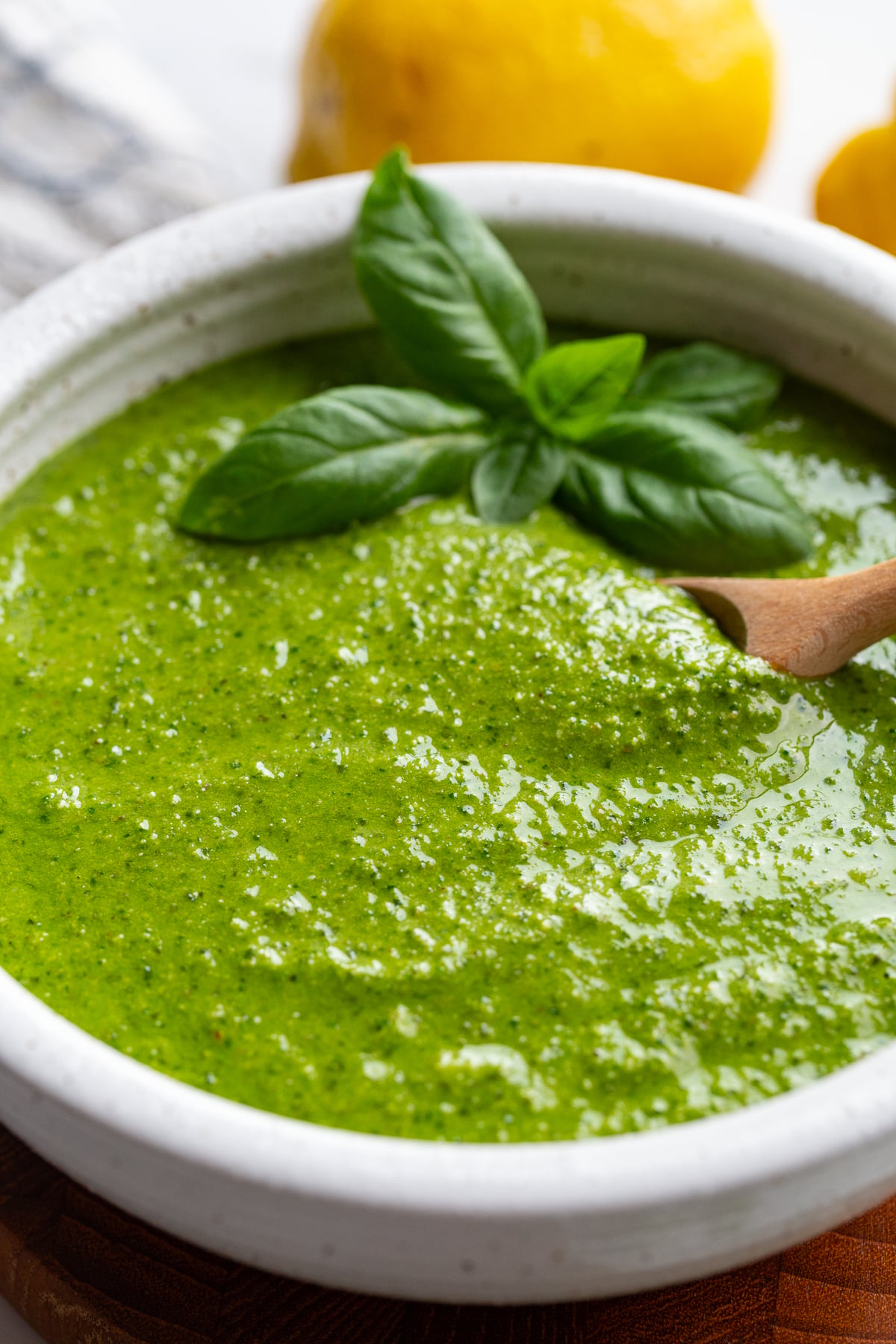
How to Make Walnut Pesto
Just a reminder that you can find the FULL written homemade basil walnut pesto recipe down in the recipe card, but I want to quickly go over how to make them with visuals for you :)
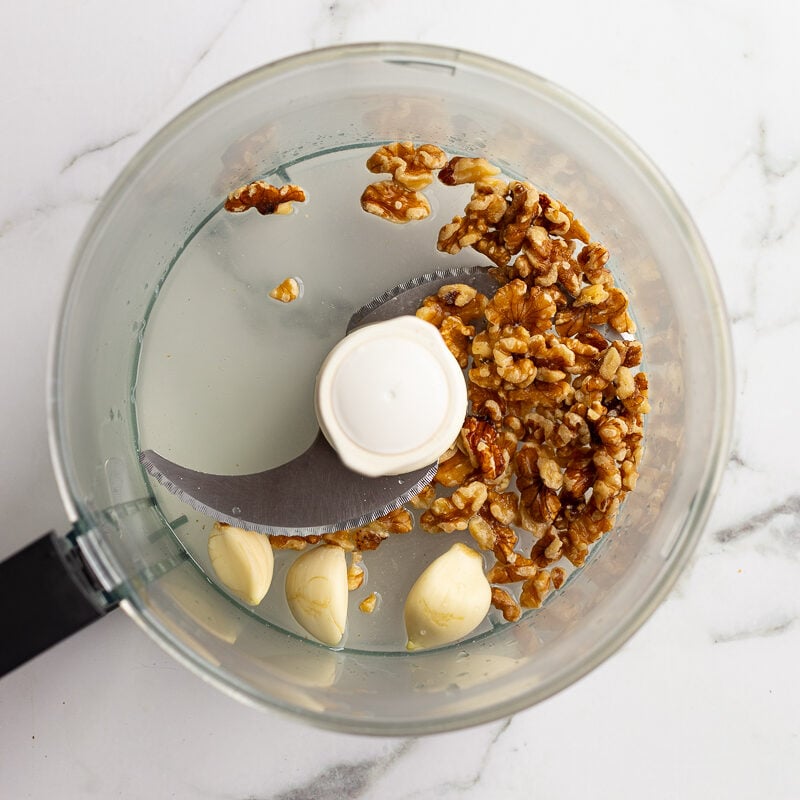
- Pulse the walnuts, garlic, and lemon juice. Add them to the bowl of a food processor and pulse about 10 times, until broken up.
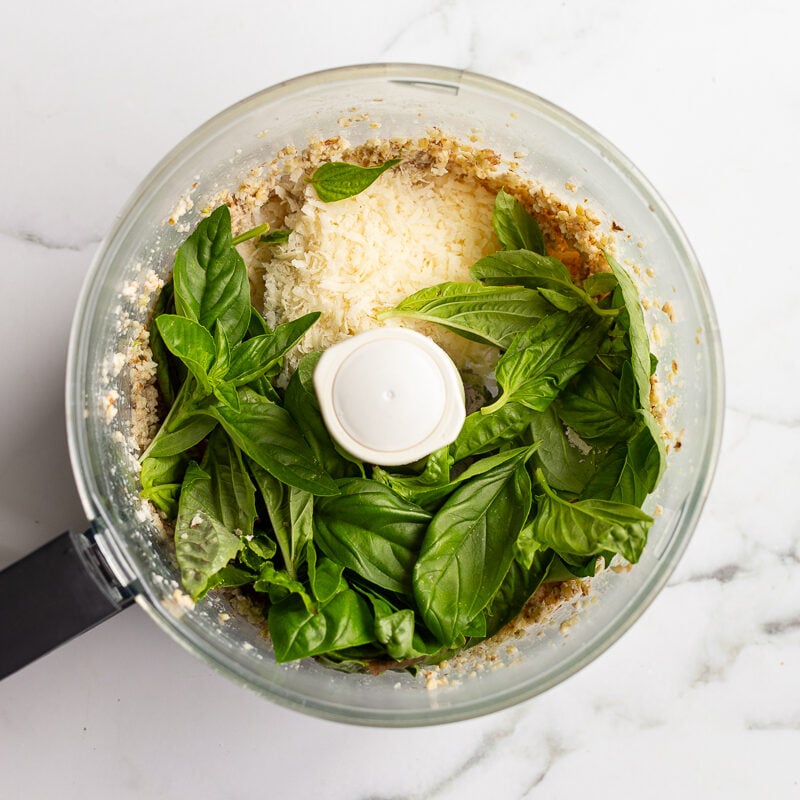
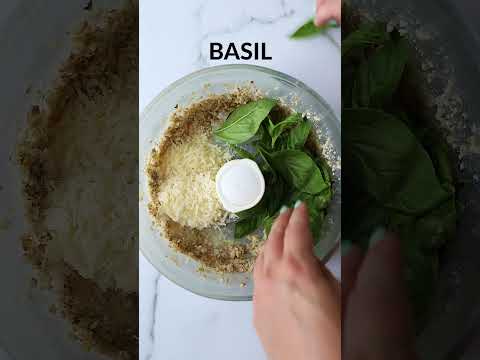
- Add the basil and parmesan. Pulse again, about 10 times, until the basil is broken into small pieces. Scrape down the sides of the processor bowl.
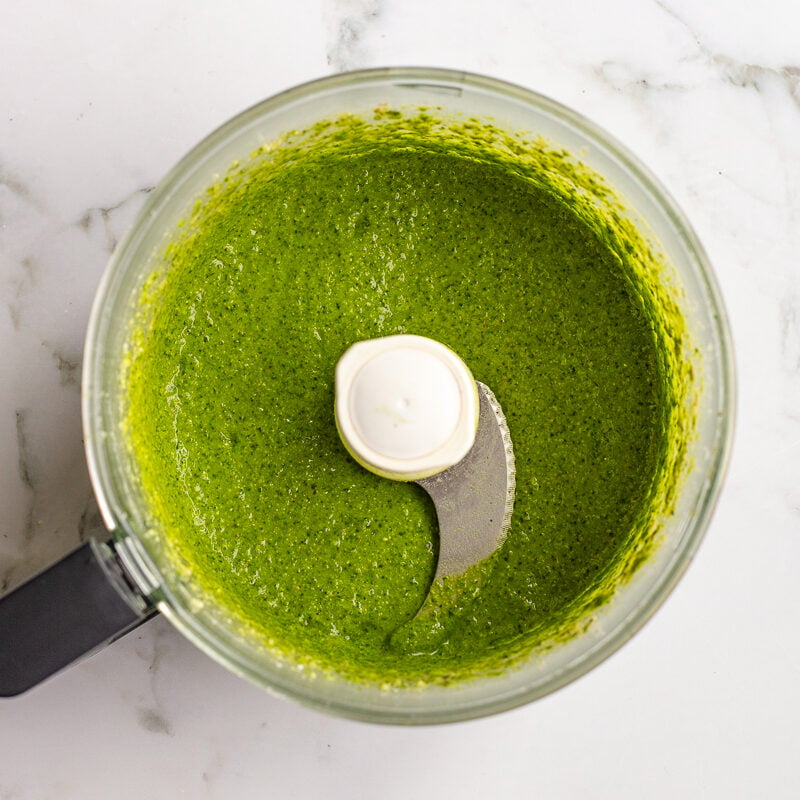
- Stream in the olive oil. and serve With the food processor running on low, slowly drizzle in the olive oil in a steady stream until it comes together into a sauce. Add salt and pepper, and more olive oil if you want it smoother or thinner. Serve it with you favorite pasta and a thin layer of olive oil!
Store any leftover pesto in an airtight container.
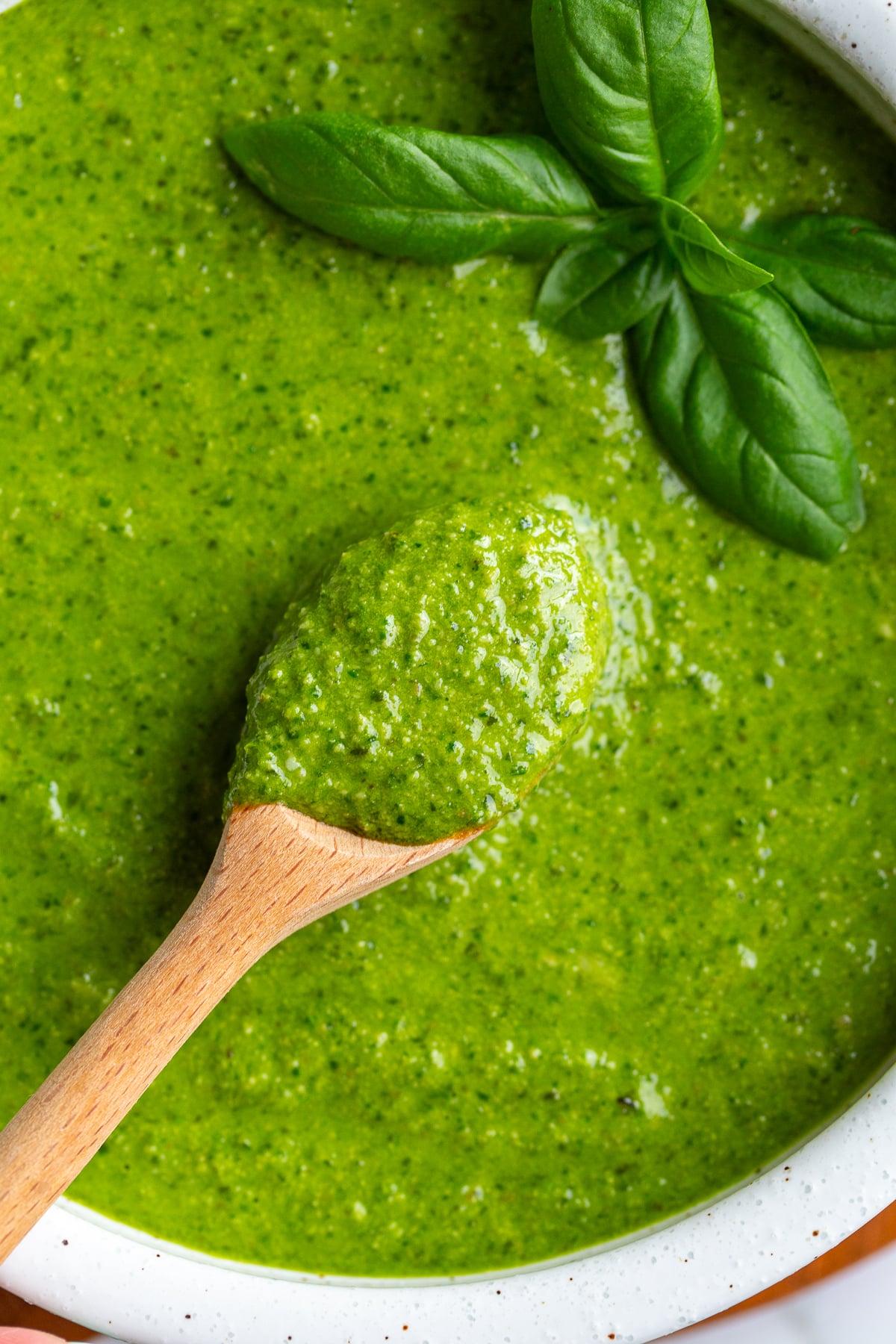
Walnut Pesto Tips
- Toast the walnuts first for a deeper, richer flavor if you have a few extra minutes.
- Don’t over-process the basil – pulsing (rather than running the processor continuously) keeps it from turning bitter or too smooth too fast.
- Adjust the oil to your texture preference – less for a thicker spread, more for a pourable sauce.
- Taste before adding salt – parmesan varies in saltiness, so season at the very end.
- Store it properly – to keep the bright green color of the pesto, place a piece of plastic wrap firmly pressed to the top of the pesto. This keeps air from getting to it.
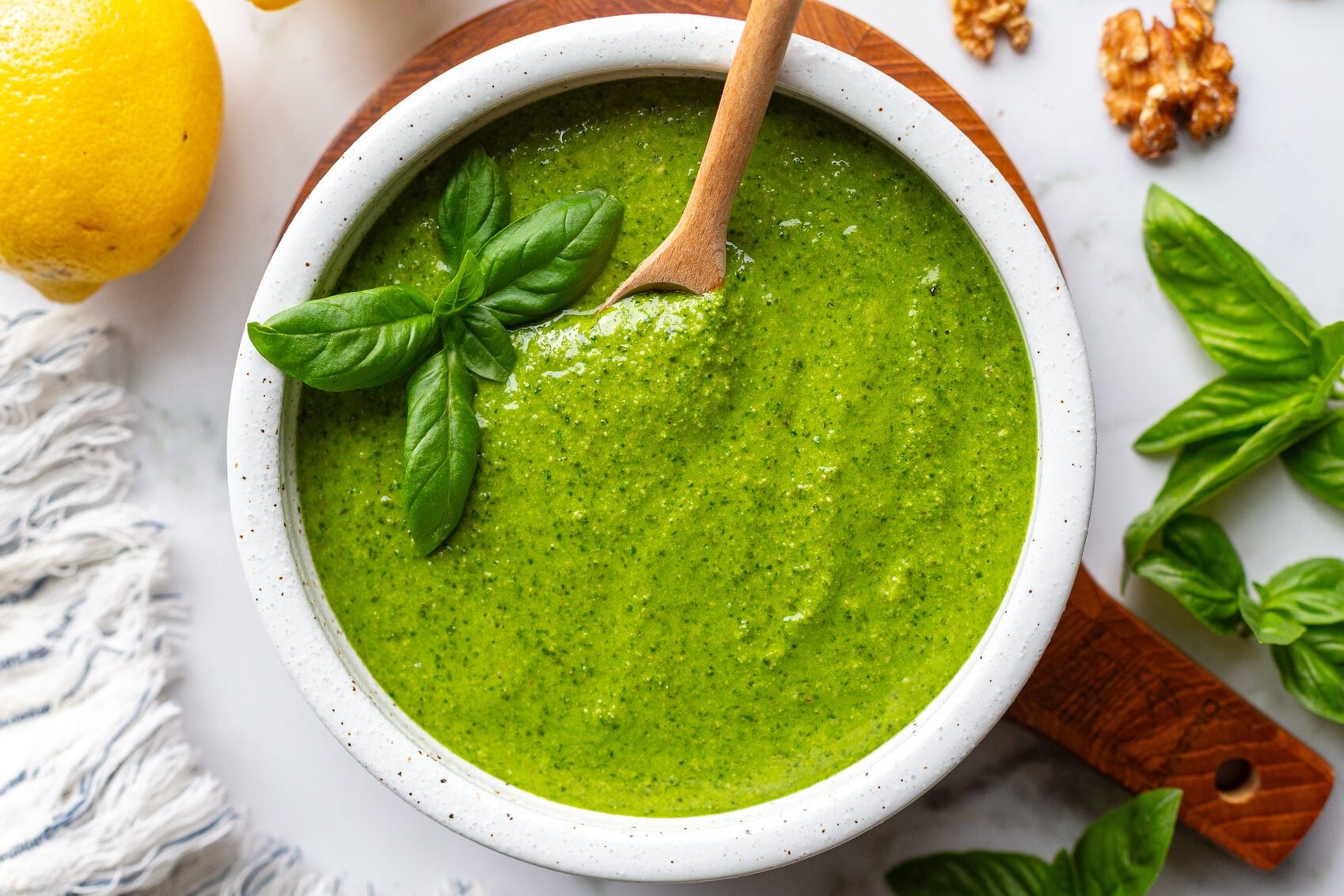
Frequently Asked Questions
Yes! Pine nuts, almonds, or even pistachios all work well in this recipe. Walnuts just tend to be the most affordable and easiest to find.
Over-processing the basil or using low-quality olive oil are usually the culprits. Pulse rather than blend continuously, and use a good extra virgin olive oil for the best flavor.
You can swap the walnuts for sunflower seeds or pepitas for a nut-free version with a similar texture.
Walnuts bring healthy fats and a bit of protein, and this pesto has no added sugar, but it is calorie-dense thanks to the oil and cheese, so a little goes a long way.
Easy Walnut Pesto
Video
Ingredients
- ½ cup walnuts
- 3-4 cloves garlic*
- 1 lemon, juiced (about 2-3 tablespoons)
- 3 cups fresh basil leaves, tightly packed
- ⅓ cup parmesan cheese, grated or shredded
- ½-⅔ cup extra virgin olive oil, plus more as desired
Instructions
- (Optional but highly recommended): Toast the walnuts in a dry skillet for a few minutes until they start to darken in color. This step is totally optional and I've made pesto many times without toasting the nuts. But I love the extra flavor.
- Add the nuts, garlic, and lemon juice to the bowl of a food processor and pulse until they are broken up – about 10 times. Next, add the basil and parmesan and pulse until the basil is broken into small pieces – about 10 pulses.
- With the food processor on low speed, slowly drizzle in ⅓ cup of olive oil. Add more olive oil as desired for a smoother consistency.
- Season with salt and pepper to taste.
Notes
Nutrition
Nutrition information is automatically calculated, so should only be used as an approximation.