This post may contain affiliate links. Please read our disclosure policy.
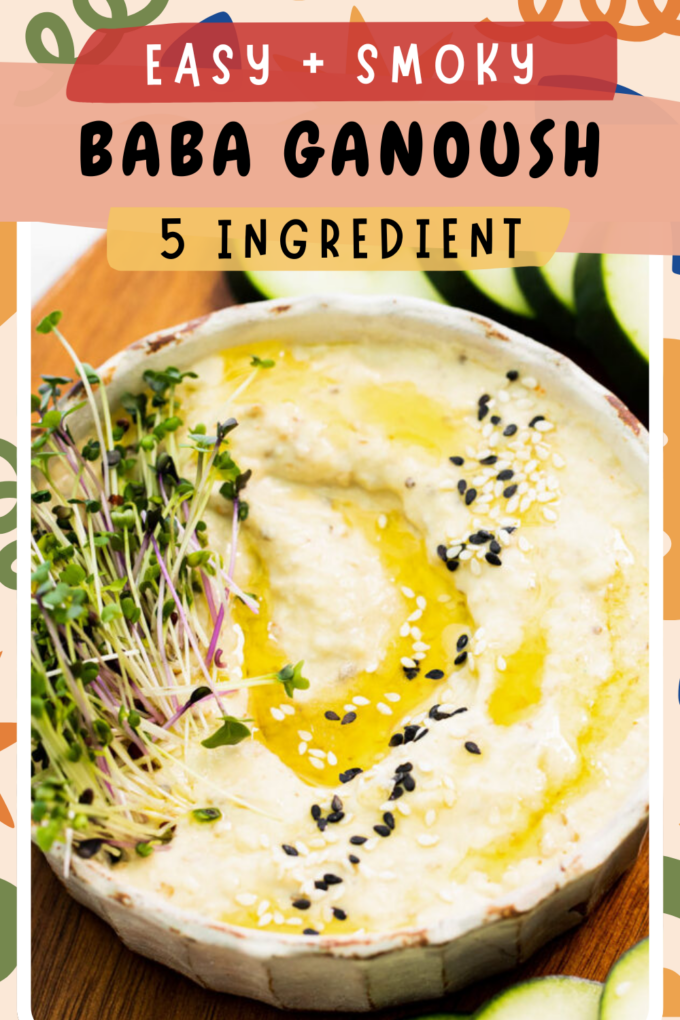
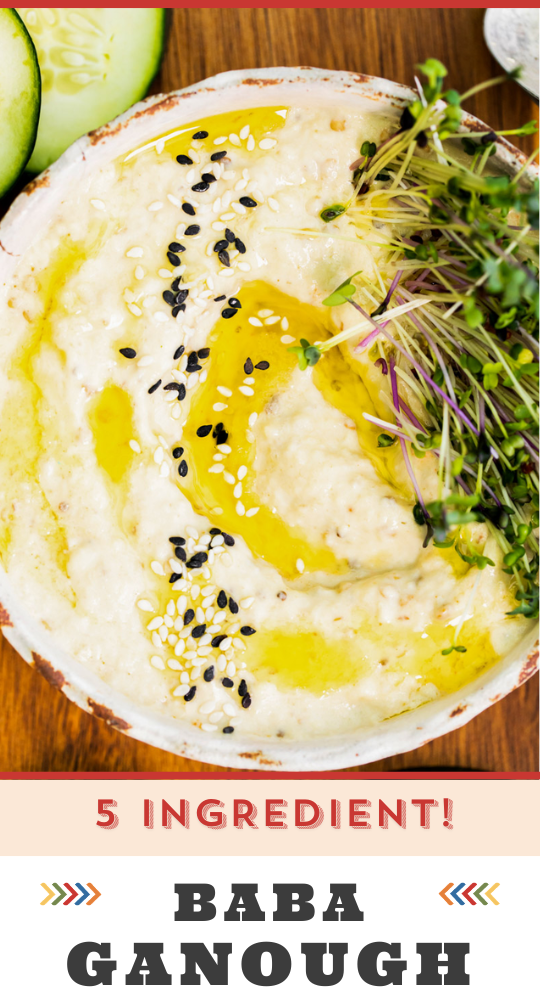
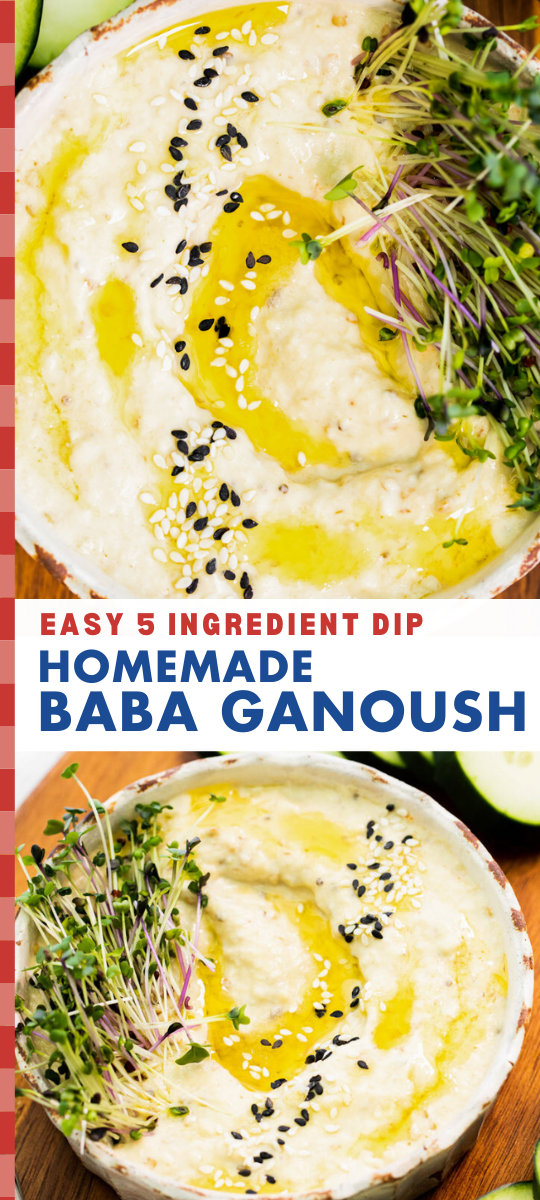
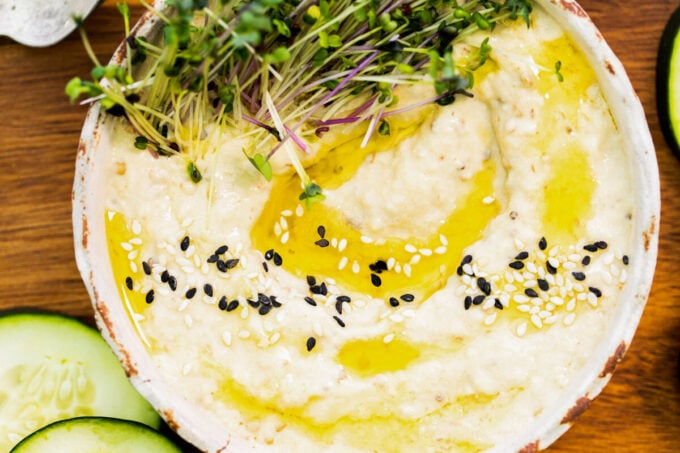
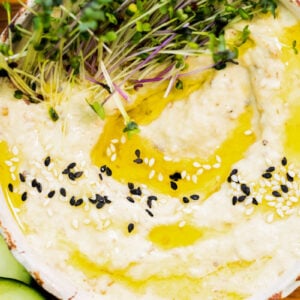
This Baba Ganoush recipe is smoky roasted eggplant blended with tahini, lemon juice, and garlic into a silky, savory dip! It comes together with just a food processor and about 45 minutes, most of it hands-off.
Love a delicious dip recipe? You need to try our Dill Pickle Dip as well as our Black Bean Dip and our Roasted Salsa Verde!
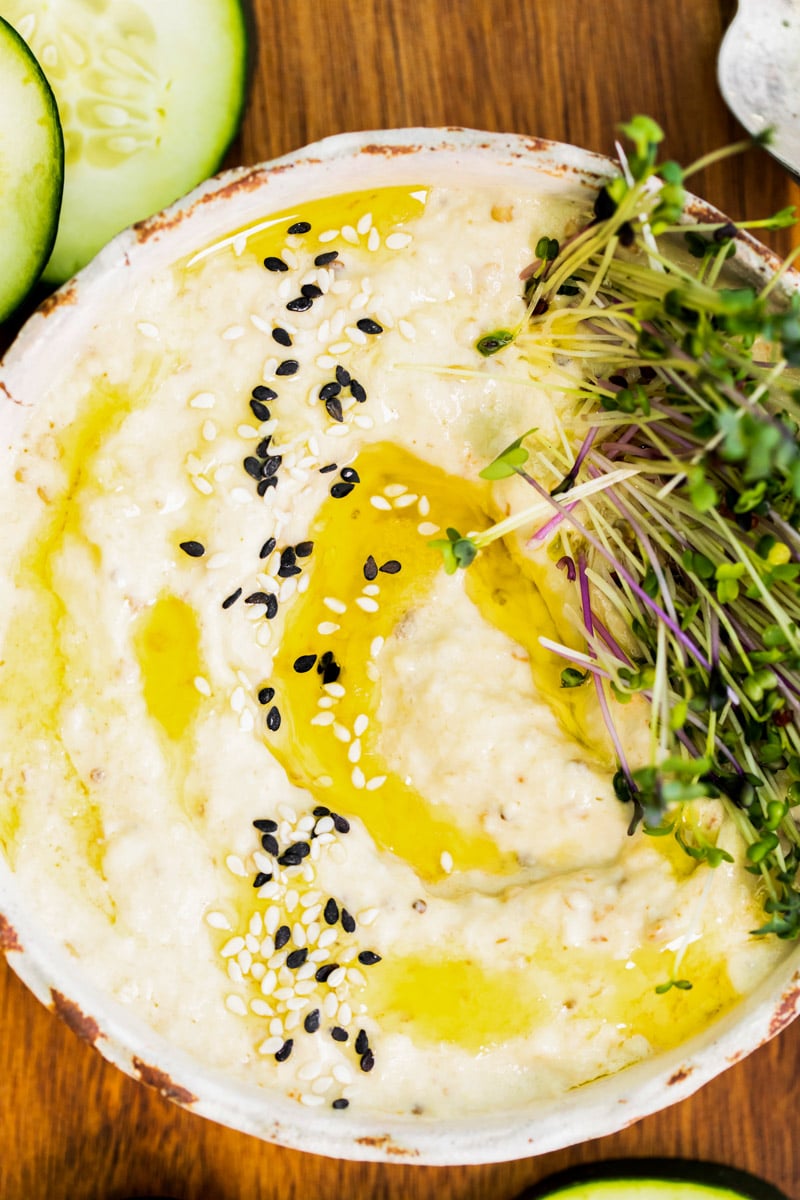
Reasons to love this easy baba ganoush recipe

Have you ever tried Baba Ganoush? It’s a great alternative to hummus and it’s quickly become one of my favorite healthier snacks to have on hand. It also makes for an easy appetizer to serve at a get together or party. It’s simple, yet flavorful and satisfying. And slightly addicting – once you start scooping, you just can’t stop!
Why you’ll love this smoky eggplant dip:
- Just 4 main ingredients and no fussy technique – throw it together without a special trip to the store.
- Make-ahead friendly – it actually tastes better the next day, once the flavors settle in.
- Naturally vegan and gluten-free – a dip that works for basically any guest list.
- BY FAR a better dip than the store-bought tubs – once you make it fresh, it’s hard to go back.
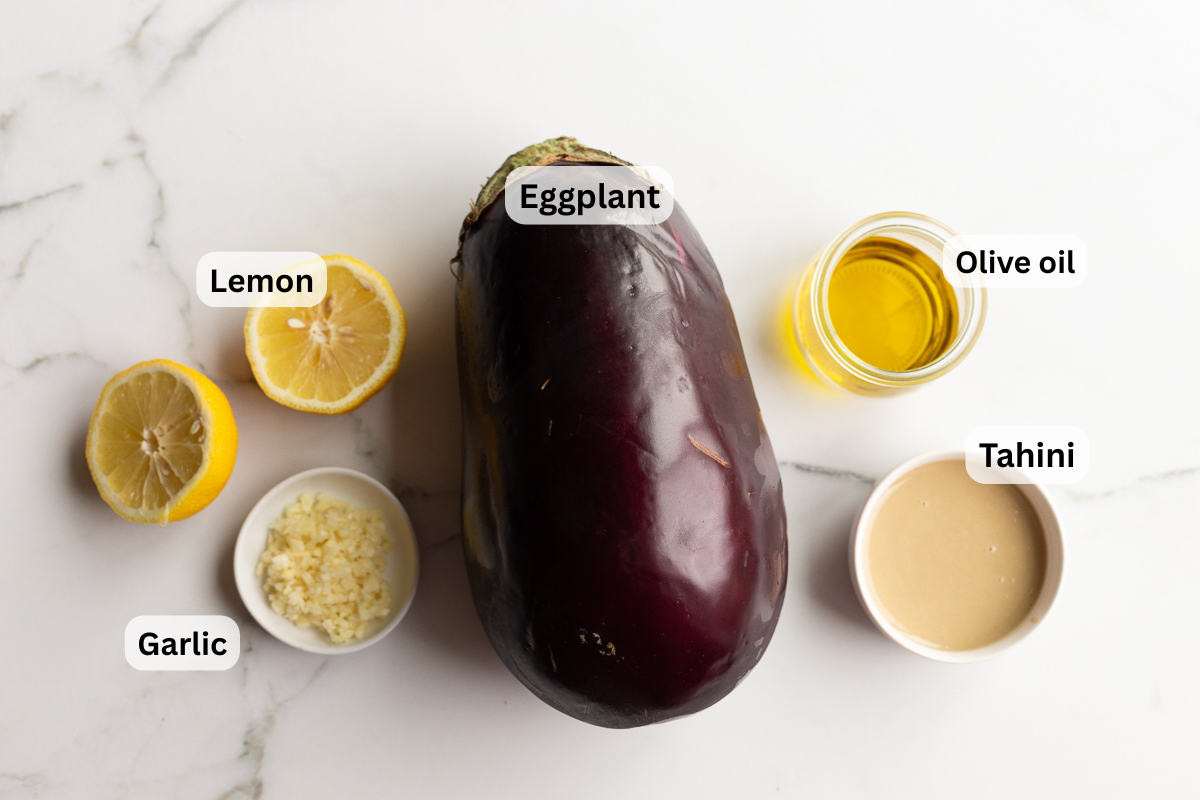
Baba Ganoush Ingredients
The list of ingredients for this recipe are listed fully down in the recipe card but let’s briefly go over the simple ingredients needed including a few substitutions you can make as desired!
- Eggplant – the base of the dip. Roasting it whole gives you soft, smoky flesh that blends into that classic creamy texture.
- Olive oil – blended right in with the eggplant for a rich, luscious texture. You’ll also use a little to rub on the eggplant before roasting.
- Tahini – sesame paste that makes the dip rich and nutty. Give the jar a good stir before measuring so you get a smooth, pourable consistency.
- Lemon juice – fresh-squeezed is worth it here. Bottled juice doesn’t bring the same brightness and kind of falls flat against the rich tahini and eggplant.
- Garlic cloves – adds punch. Start with less if raw garlic is strong for you – you can always add more once you taste it. Roasted garlic would also be delicious in this recipe!
- Optional smoked paprika – this gives the baba ghanoush an extra smoky flavor! Cayenne pepper would also work well.
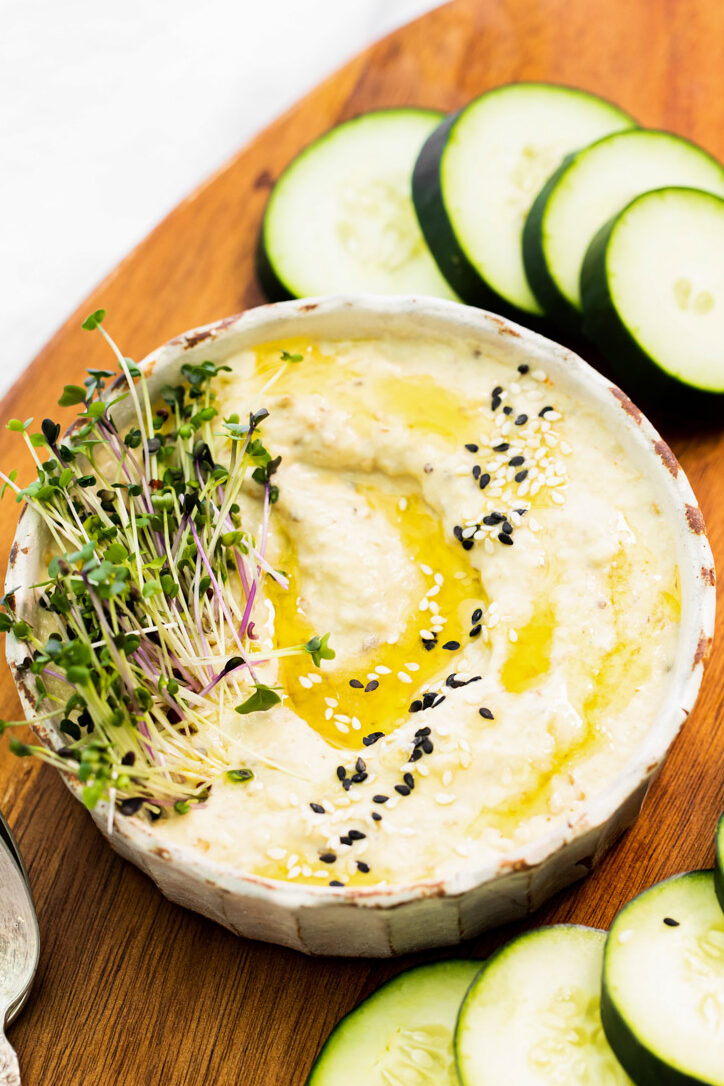
How to Make Baba Ganoush
Just a reminder that you can find the FULL written classic baba ganoush recipe down in the recipe card, but I want to quickly go over how to make them with visuals for you :)
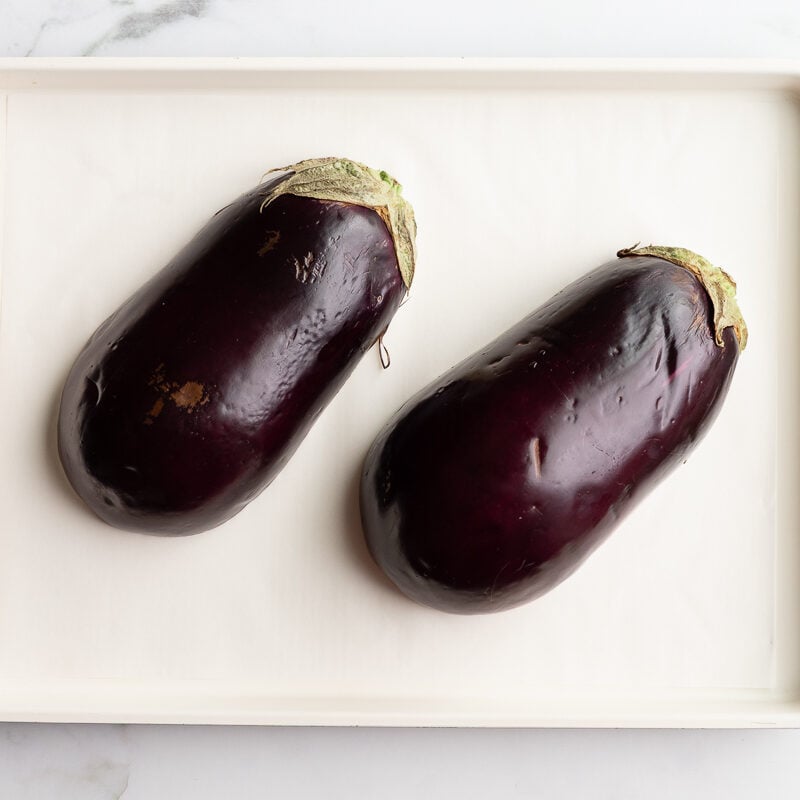
- Roast the eggplant. Cut a large eggplant in half, rub the cut side with a drizzle of olive oil and score the tops in a criss cross pattern. Roast, cut-side down, on a baking sheet in a single layer until it’s totally collapsed and fork-tender. Don’t rush this part – fully soft eggplant is what gives you that silky texture later.
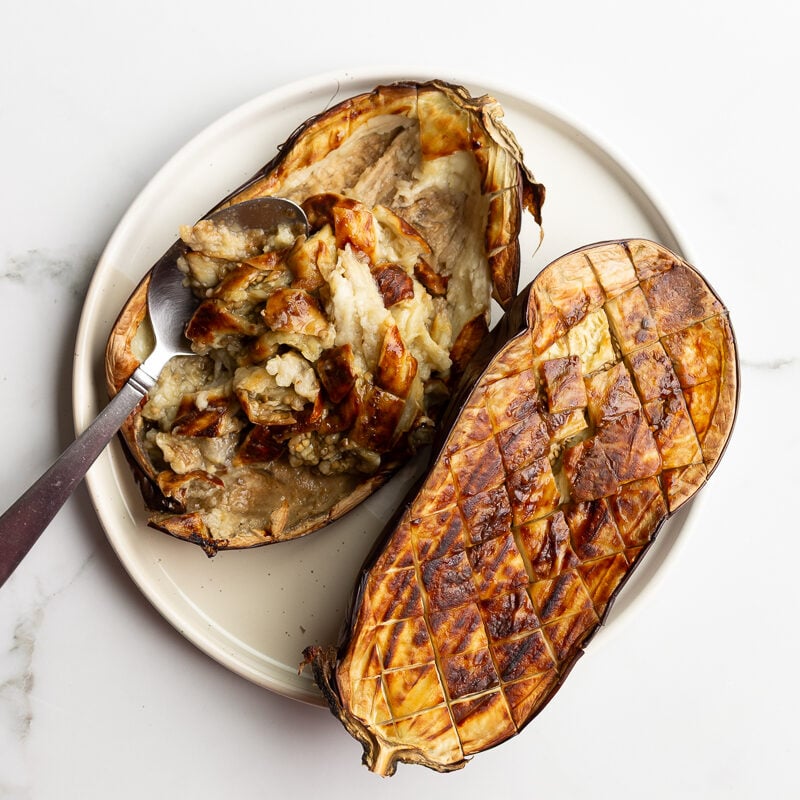
- Scoop the flesh. Once cool enough to handle, scoop out the flesh of the oven-roasted eggplant with a spoon, leaving the charred skin behind.
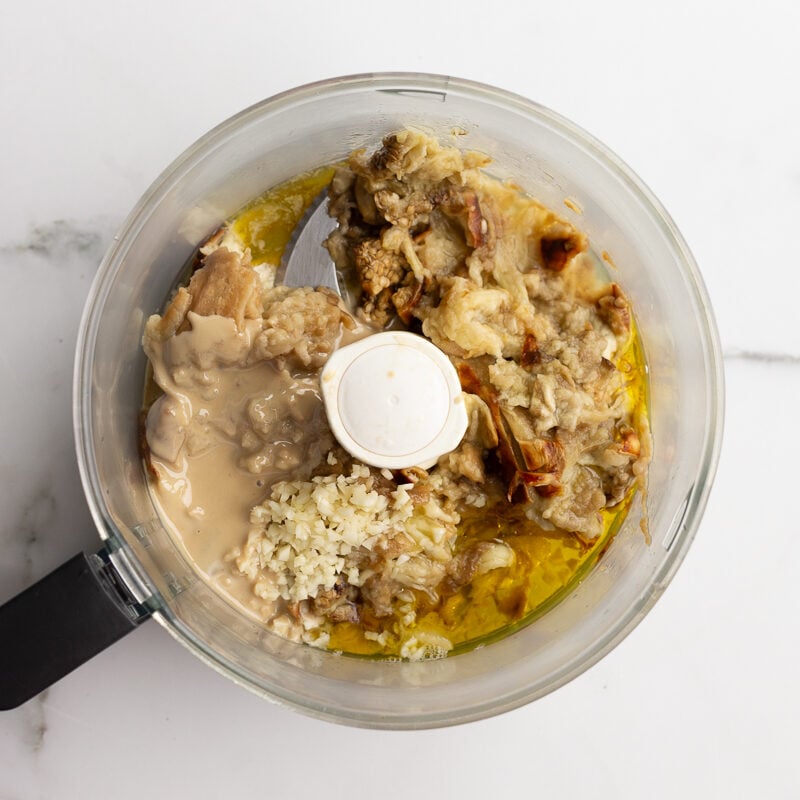
- Add everything to the food processor. Add the eggplant flesh to a food process along with the remaining ingredients including tahini, garlic, and olive oil – no need to be precise here, it’s all getting blended together anyway.
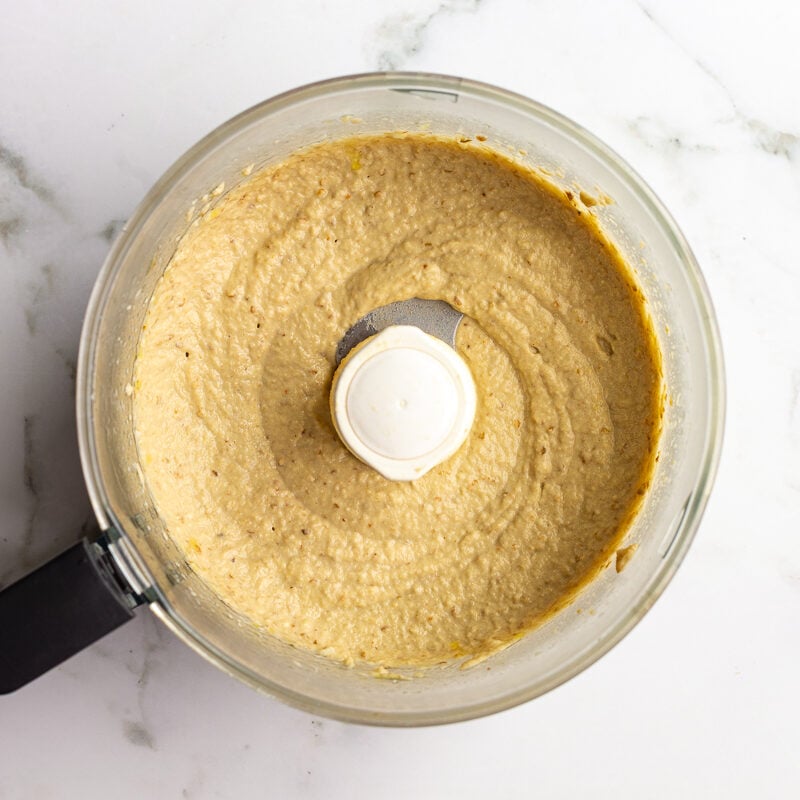
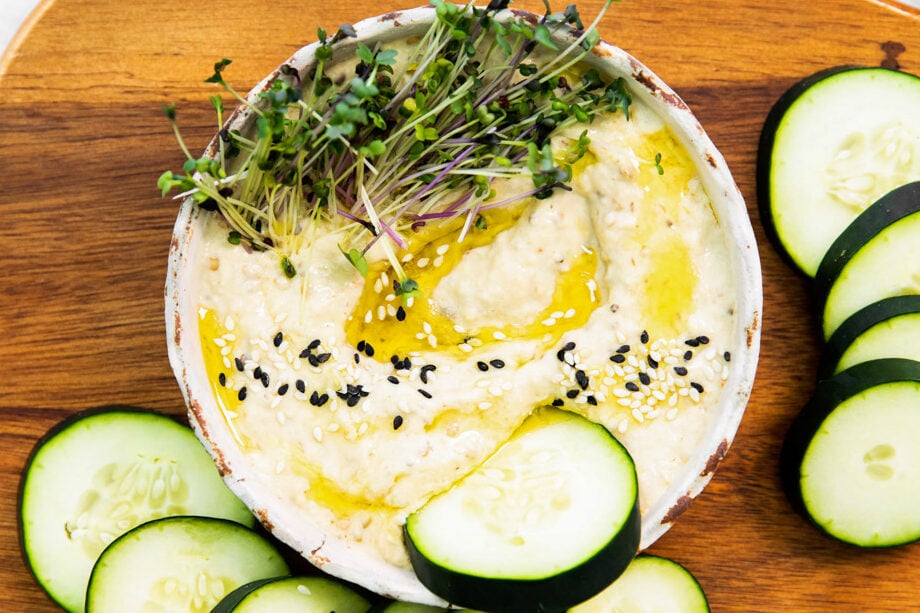
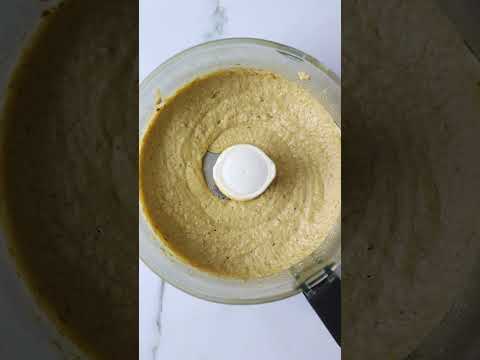
- Blend until smooth. Pulse until silky and creamy, scraping down the sides as needed. Taste and adjust with more lemon juice, salt, or garlic before serving. Pour into a serving bowl, garnish with sesame seeds + fresh herbs, and serve with pita chips and fresh veggies!
I love this dip at room temperature but it’s great cold or even warm too.
Store leftovers in an airtight container.
Recipe Tips
- Drain the eggplant. After roasting, let the flesh sit in a strainer for a few minutes before blending. Skipping this is the #1 reason baba ganoush turns out watery.
- Fresh lemon juice only. Bottled juice is convenient but it mutes the brightness that makes this dip pop.
- Taste before you finish. Garlic and tahini both intensify as the dip sits, so start light and adjust right before serving.
- If it tastes bitter, it’s usually an underripe or older eggplant, or a tahini brand that skews bitter. A splash more lemon juice (or even a tiny drizzle of honey) balances it right out.
- Want more smoke? Grill the eggplant over an open flame instead of roasting it for a deeper, charred flavor – just know it’ll take a bit more attention than the hands-off oven method.
Frequently Asked Questions
They’re cousins, but not the same dip. The main difference is the base ingredient: baba ganoush is made from roasted or charred eggplant, while hummus is made from chickpeas. That swap changes everything about the texture and flavor – baba ganoush tends to be lighter and smokier, while hummus is thicker and more filling. Honestly, I love keeping both on a spread.
Too much excess liquid in the roasted eggplant is usually the culprit. Let the roasted flesh drain in a strainer for at least 10 minutes before blending and you should be in good shape.
This one’s almost always about the eggplant itself. If it comes out bitter, your eggplant may be older or out of season – fresh eggplants tend to have milder, sweeter flesh. A bitter tahini brand can also be the culprit. A little extra lemon juice helps balance it out either way.
Yep! Traditionally, baba ganoush is a rustic dip made by gently mixing the cooked eggplant with the rest of the ingredients using a wooden spoon or fork for a chunkier texture. A food processor just gets you a smoother, more spreadable dip.
Baba Ganoush
Video
Ingredients
- 1 large eggplant
- ¼ cup + 1 tablespoon of olive oil, divided
- ¼ cup tahini
- 1 lemon, juiced (about 1/4 cup)
- 3 cloves garlic, minced
- Salt and pepper, to taste
Instructions
- Preheat the oven to 400ºF. Line a medium baking sheet with parchment paper.
- Cut the eggplant in half from top to bottom and then rub the inside with 1 tablespoon of olive oil. Place the 2 halves, cut side down, on the prepared baking sheet and bake until they are fork tender– about 40 minutes.
- Remove from the oven and allow the eggplant to cool until you can handle them. Remove the flesh using a spoon and transfer it to the bowl of a food processor.
- Add the remaining ⅓ cup olive oil, tahini, lemon juice, and garlic. Pulse until the mixture is well combined– about 15 seconds. Season with salt and pepper and enjoy.
- Store any leftovers in the fridge in an airtight container for up to 3 days.
Notes
Nutrition
Nutrition information is automatically calculated, so should only be used as an approximation.