

This post may contain affiliate links. Please read our disclosure policy.
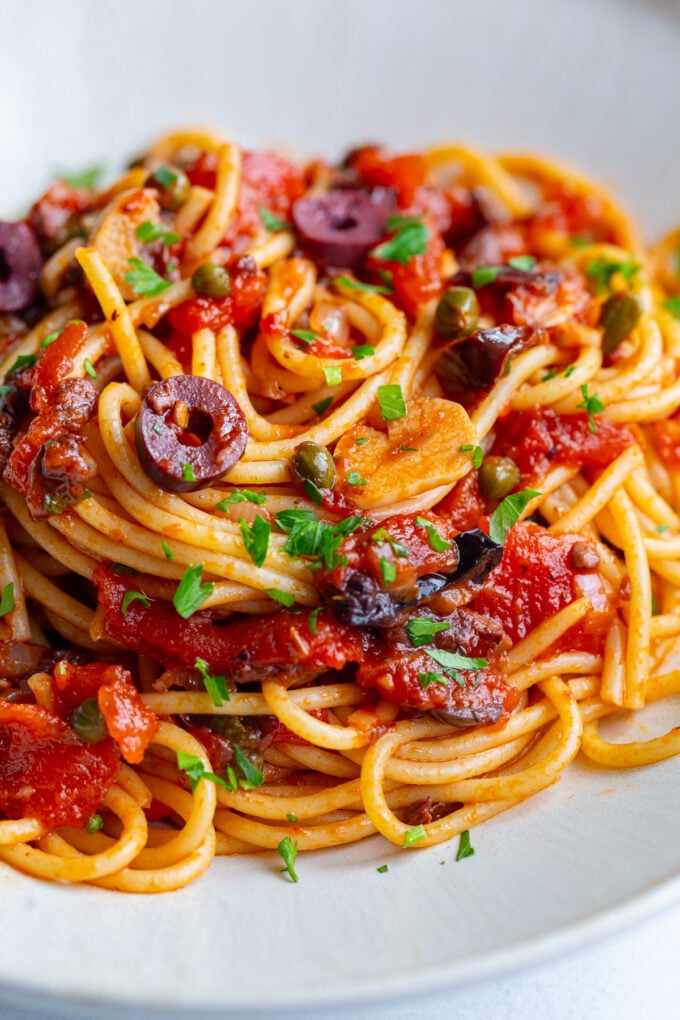
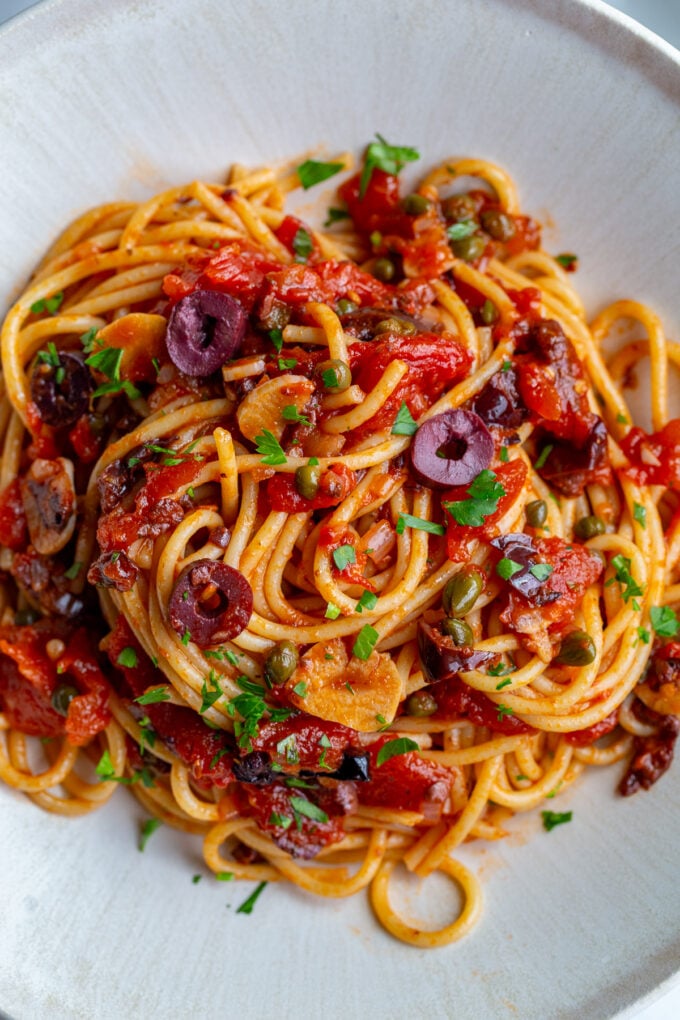
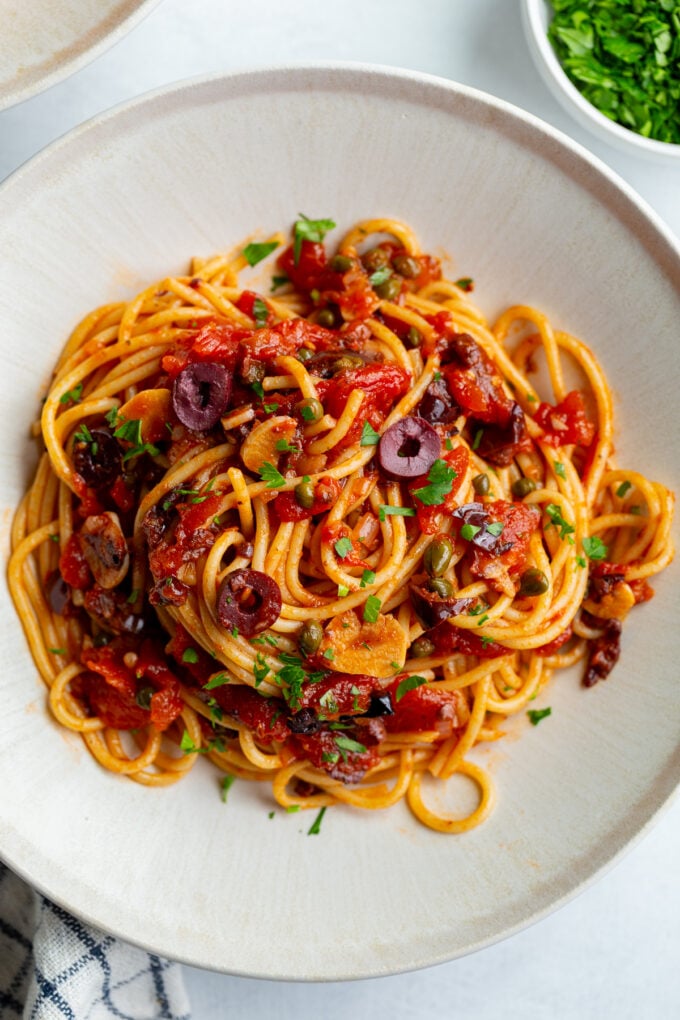
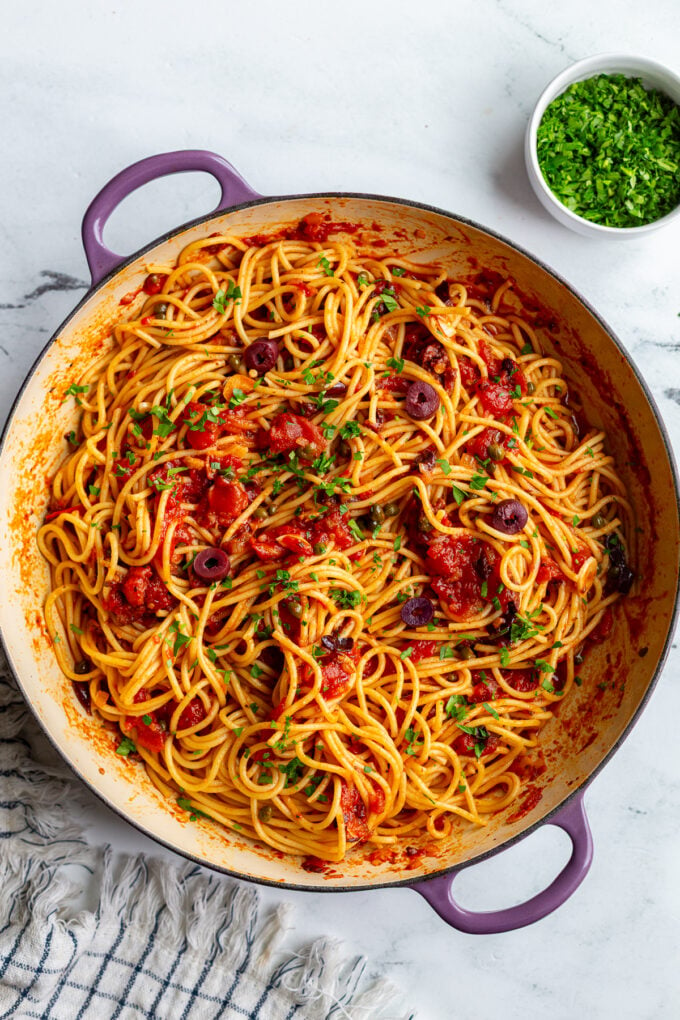
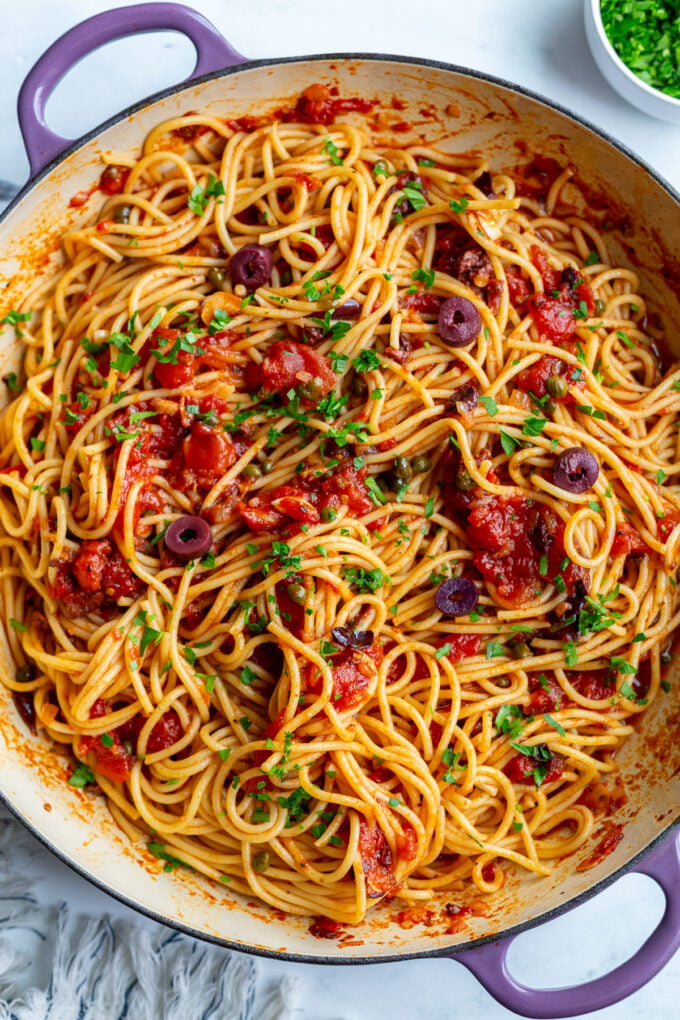
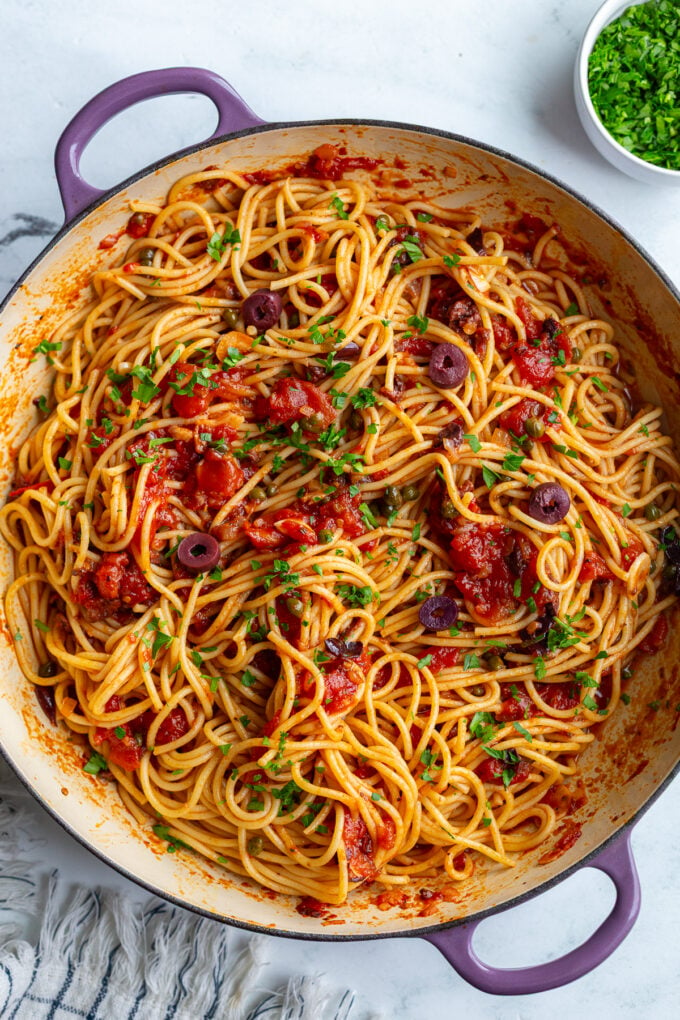
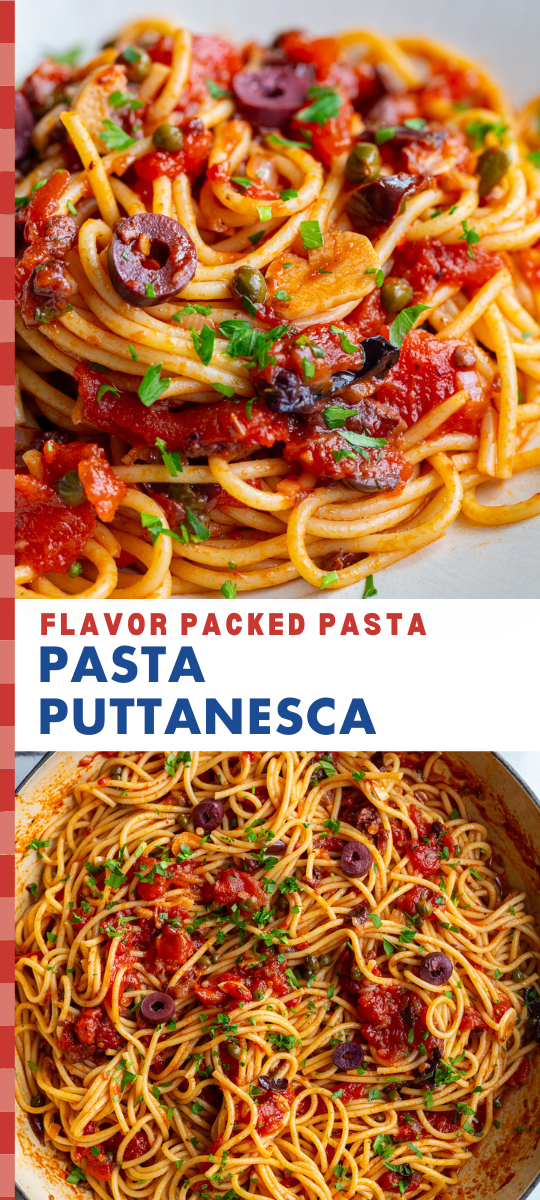
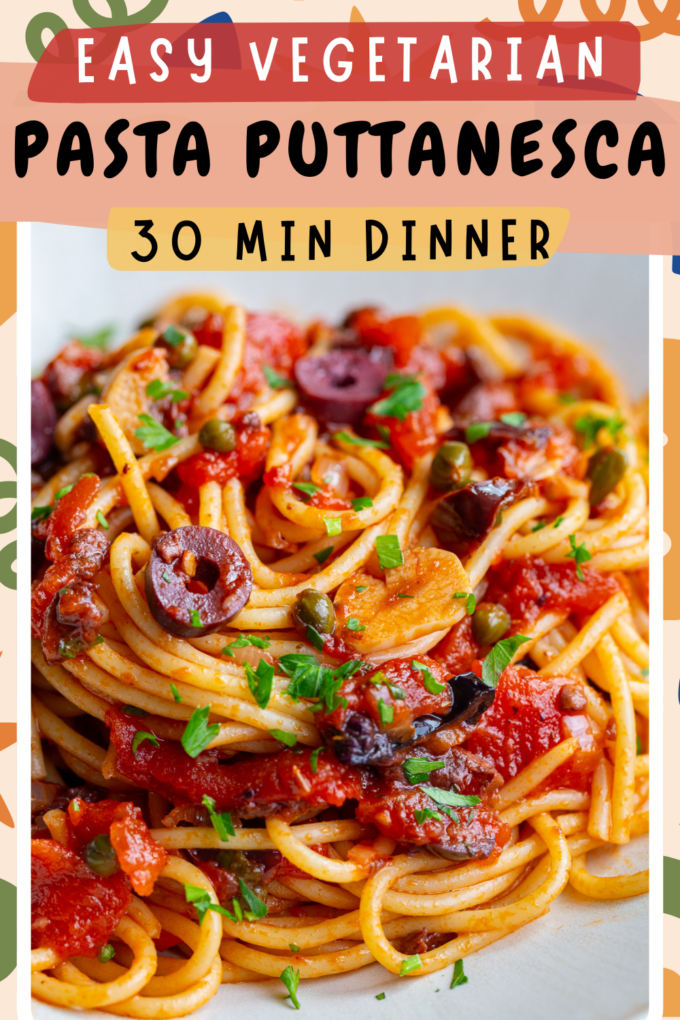
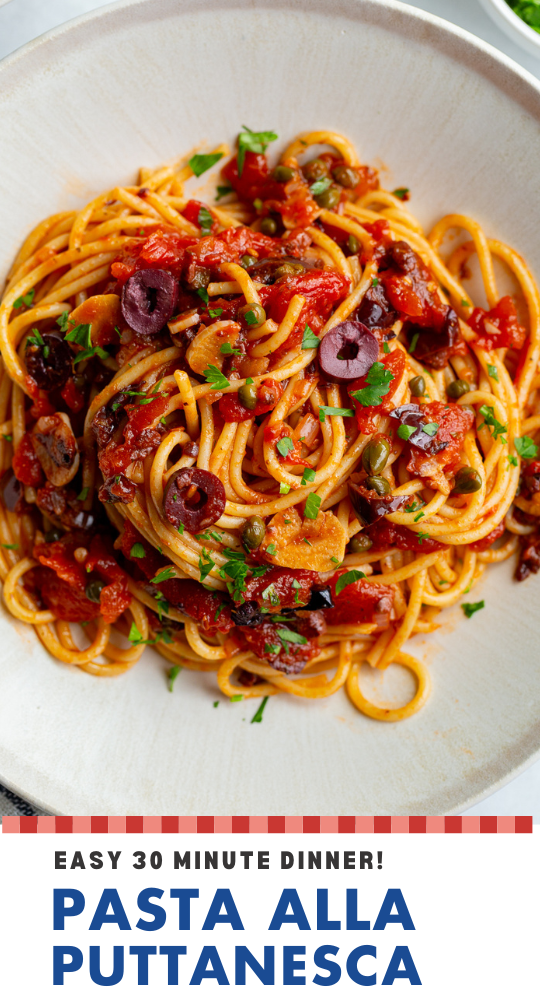
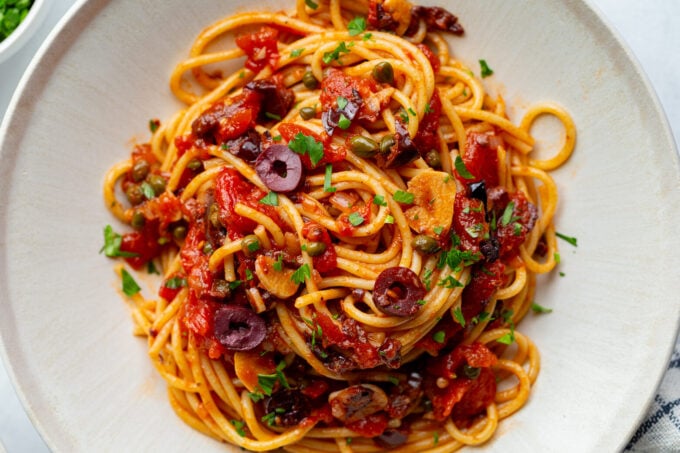
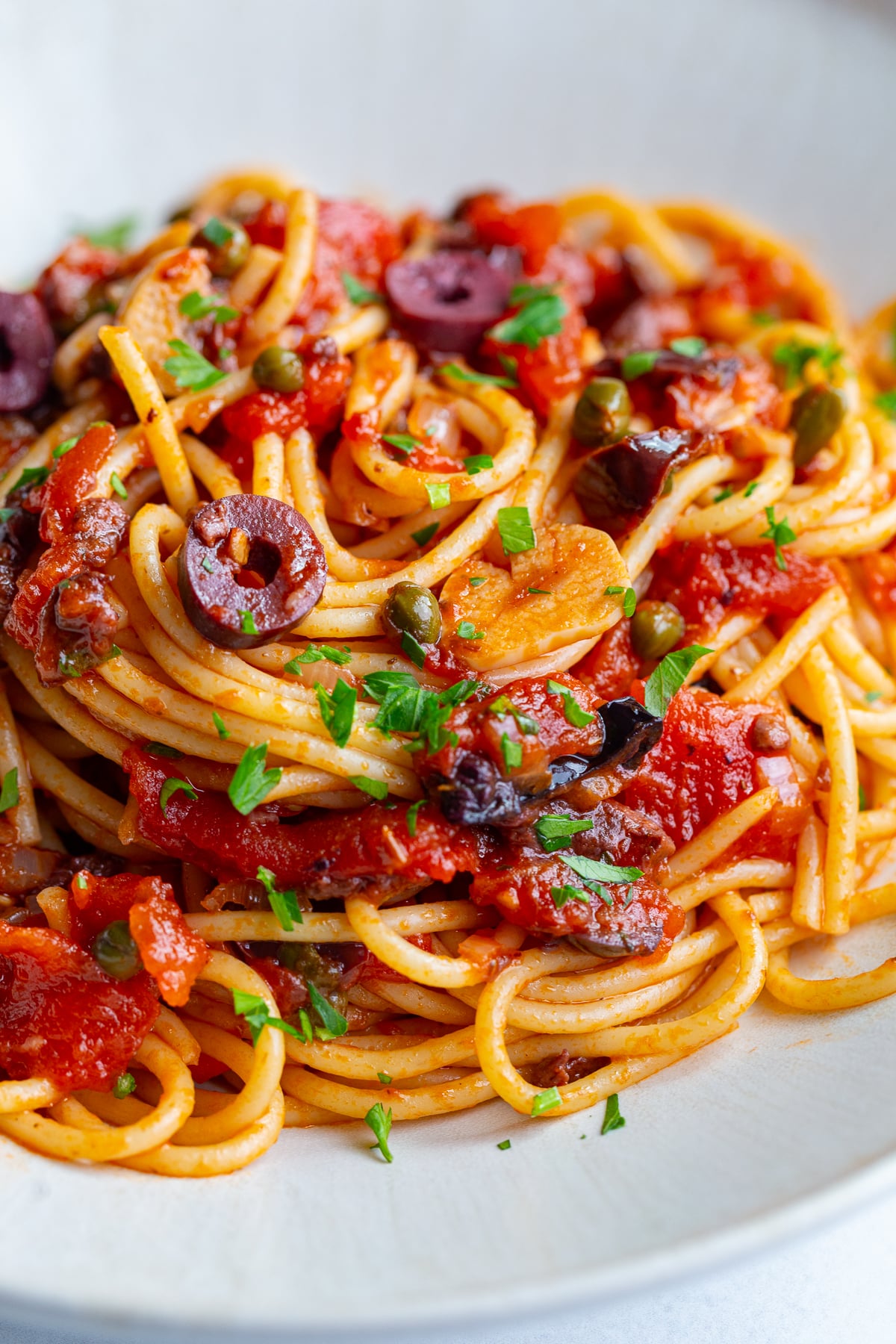
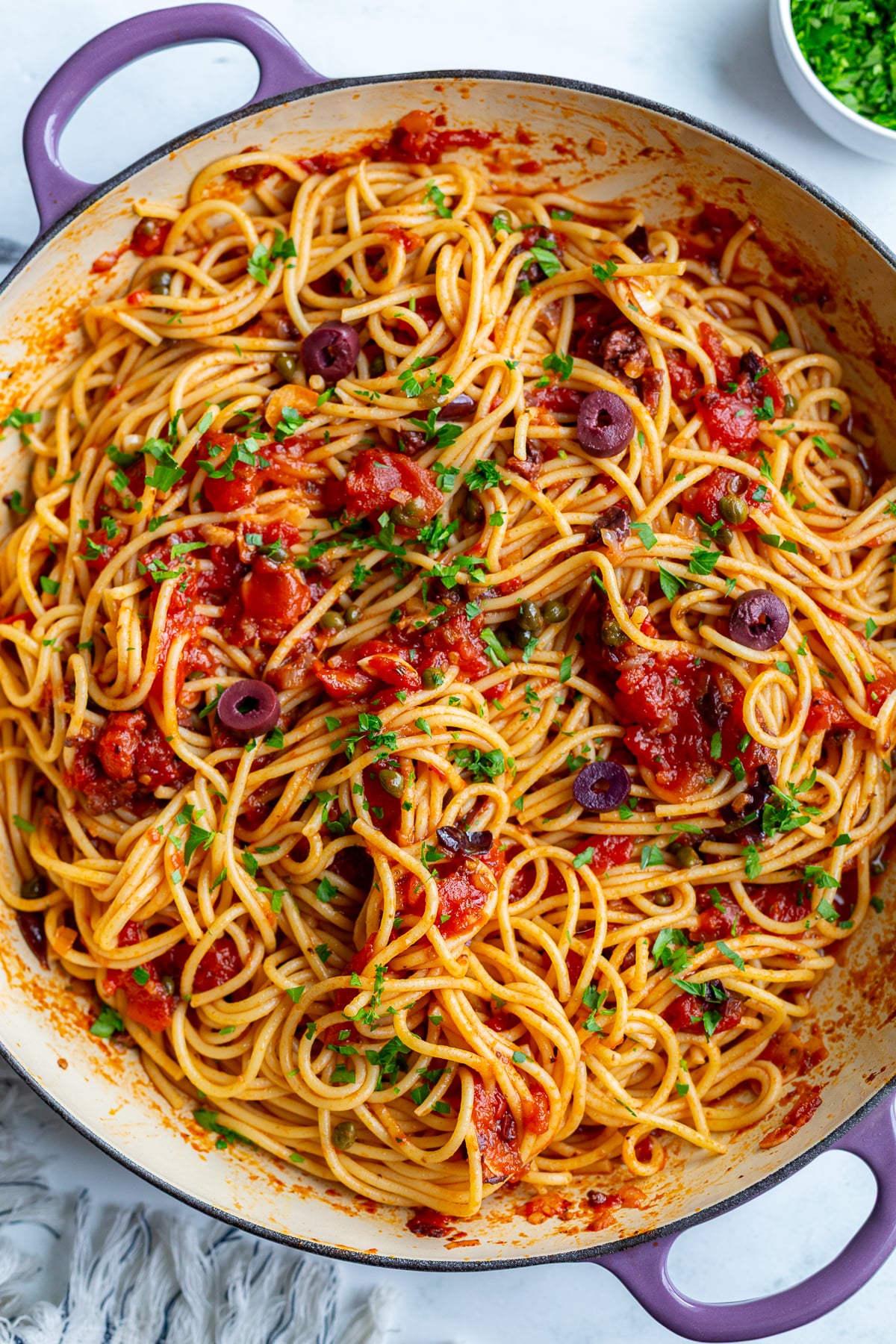
This Pasta puttanesca recipe is one of those saucy dishes that punches way above its weight – olives, capers, garlic, and tomatoes simmered together until it’s salty, briny, and just a little spicy. It comes together in about 30 minutes, mostly with stuff you already have in the pantry!
Love a good pasta dish? You need to try our Pesto Pasta Salad as well as our Easy Baked Pasta recipe and our Simple Alfredo Pasta!
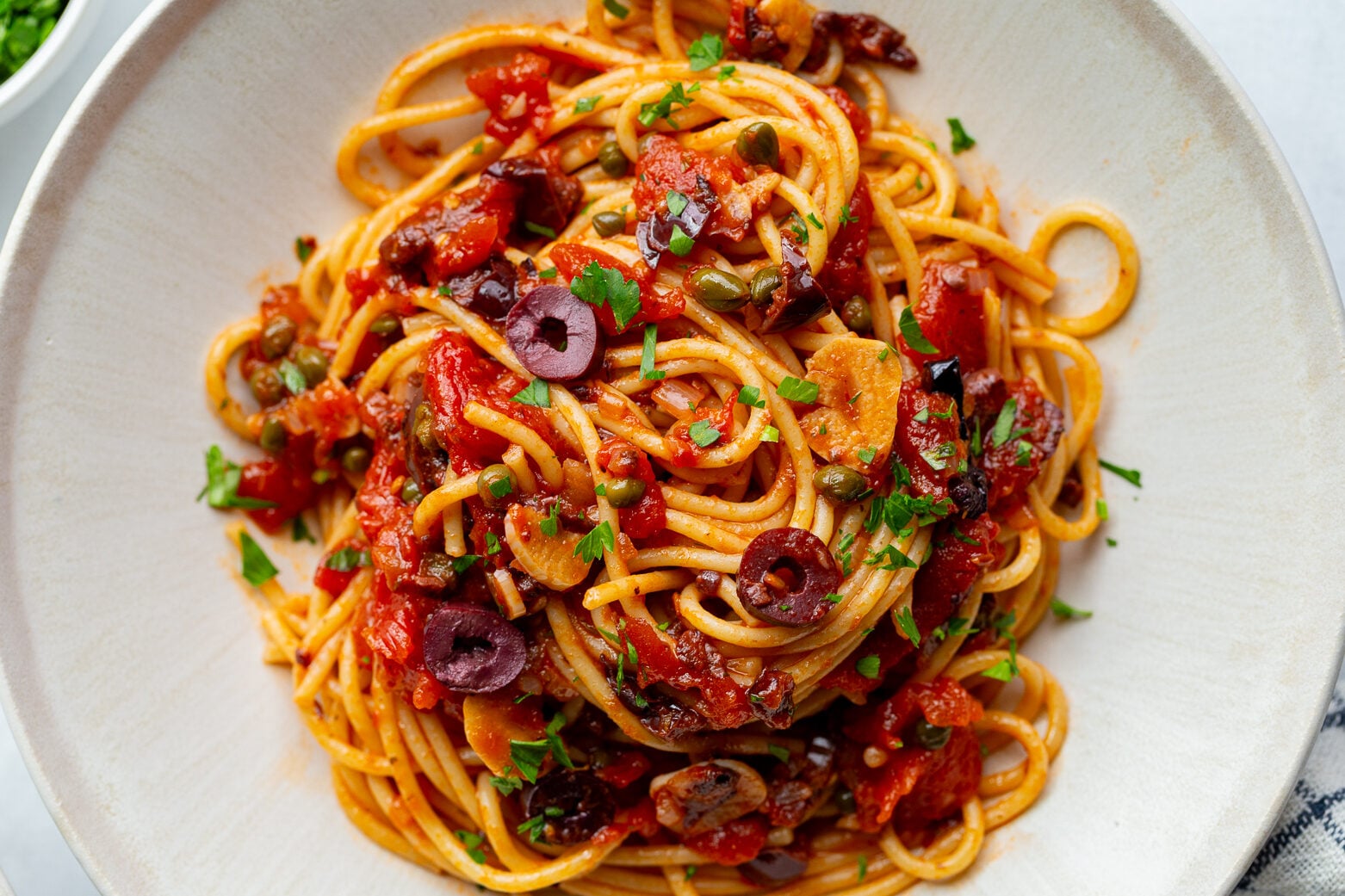
Why you’ll love this spaghetti alla puttanesca

I’m no stranger to an Italian classic like this Puttanseca! Growing up with an Italian father who LOVED to cook, he did a great job of introducing us to the staple recipes of Italy. This puttanesca is a simple sauce but it’s also a DELICIOUS sauce that I absolutely love. It’s one of those recipes that feels elevated but in reality is a simple and approachable weeknight meal!
Why You’ll Love This
- Pantry-friendly – mostly canned tomatoes, olives, and capers you probably already have
- Ready in 30 minutes, so it’s an easy win on a busy weeknight!
- Naturally vegetarian, with easy notes for adding anchovies or extra protein if you want
- Big, bold flavor from a short ingredient list – no fuss required
In this post…
Ingredients needed
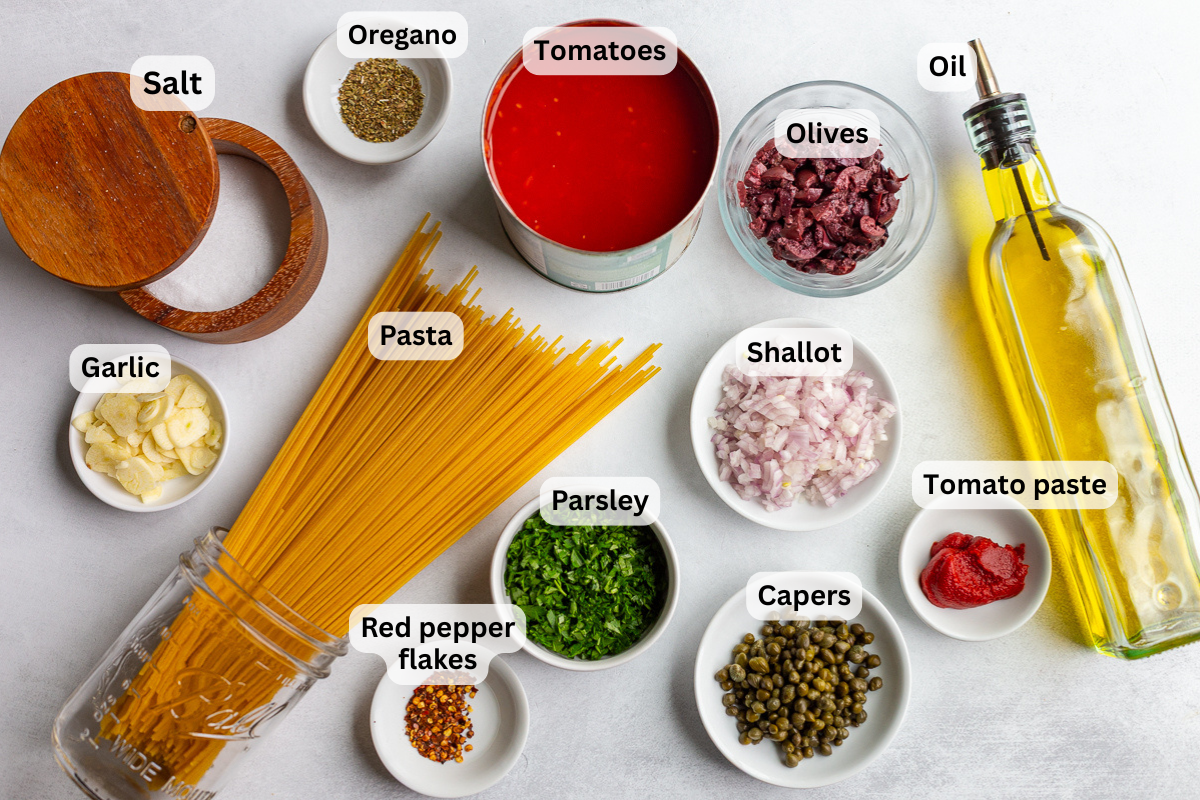
The simple ingredients for this pasta alla puttanesca recipe are listed fully down in the recipe card but let’s briefly go over the pantry staples needed including a few substitutions you can make as desired!
- Spaghetti or linguine – either shape works great, use whatever long pasta you have on hand. Really any pasta works, at the end of the day, so use your favorite pasta.
- Shallot – adds a little sweetness to balance the salty olives and capers
- Garlic – five garlic cloves sounds like a lot, but it mellows out as it cooks
- Kalamata olives – bring the signature briny punch – swap in Castelvetrano olives or black olives if you want something milder and more buttery
- Capers – don’t skip the briny capers, they’re what makes puttanesca taste like puttanesca
- Red pepper flakes – brings the heat, add more or less depending on your spice tolerance
- Dried oregano – rounds out the flavor with a little earthiness
- Tomato paste – deepens the tomato flavor and helps thicken the sauce
- Whole peeled tomatoes – crushing them yourself gives a chunkier, more rustic sauce
- Fresh Parsley or fresh basil – stir some in, save some for serving for a pop of freshness
- Extra virgin olive oil – use a good quality of olive oil!
- Optional – if you’re not vegetarian, you can add anchovy fillets or anchovy paste for a greater depth of flavor
How to Make It
Just a reminder that you can find the complete recipe down in the recipe card, but I want to quickly go over how to make them with visuals for you :)
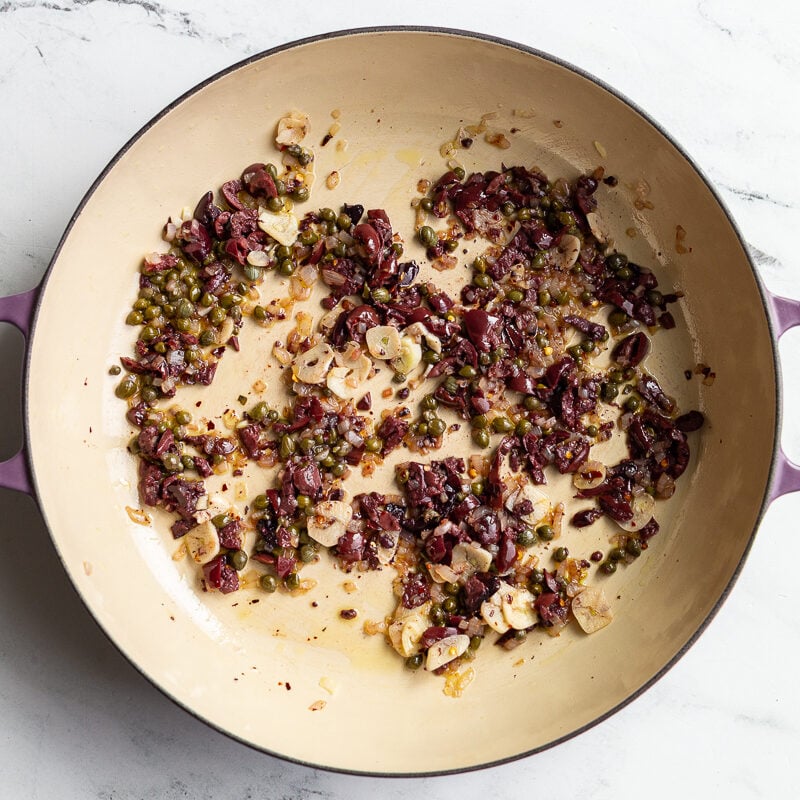
- Cook down the aromatics. Garlic, shallot, olives, and capers get sautéed together in a large skillet over medium-high heat until everything turns golden and fragrant.
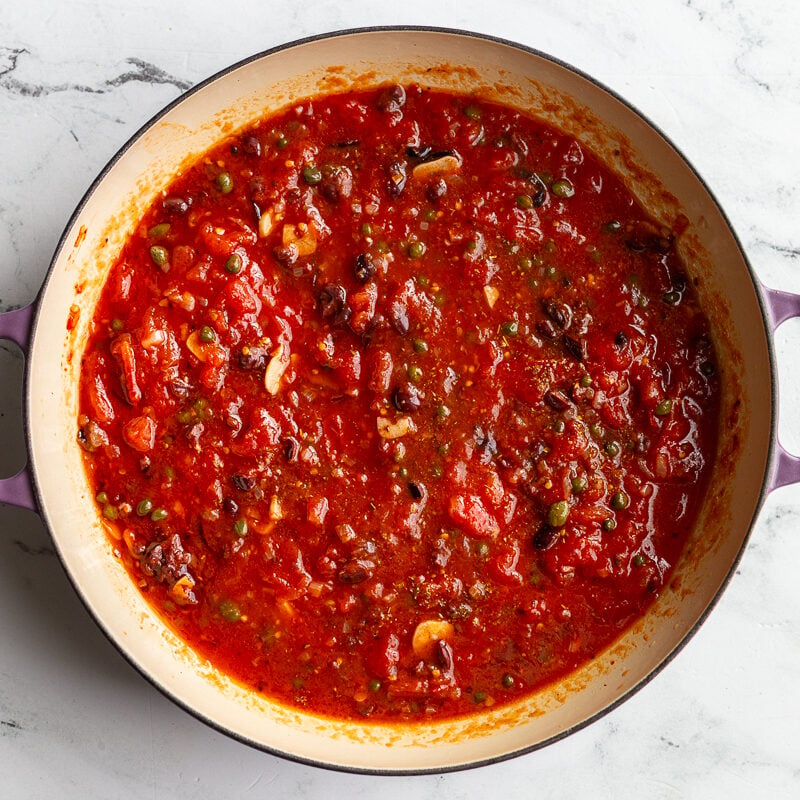
- Build the tomato-based sauce. Crushed tomatoes go in and simmer down with the olives and capers until thick, rich, and deeply red.
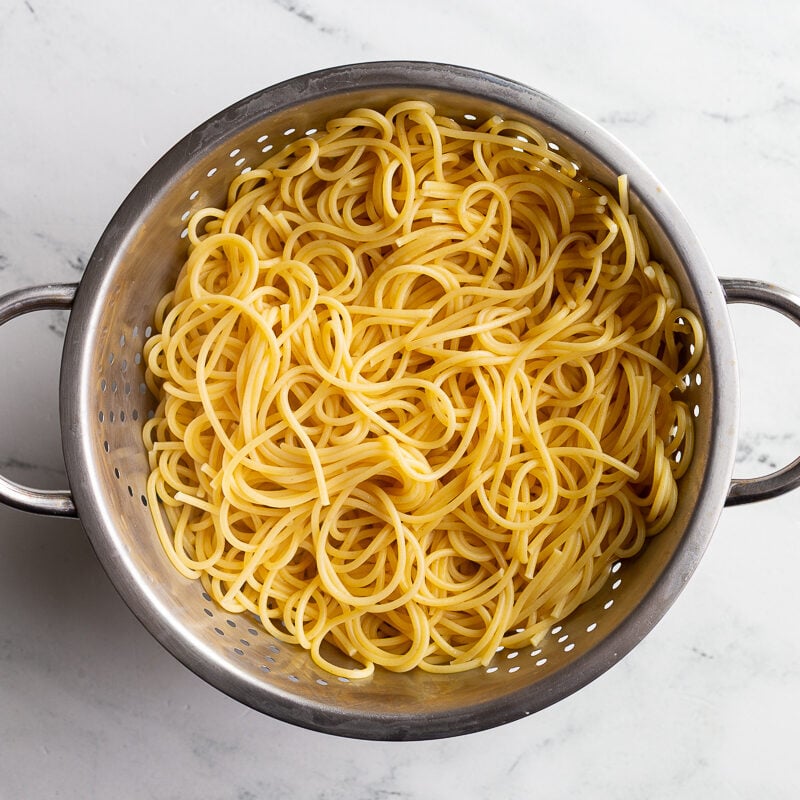
- Boil the pasta. While the puttanesca sauce simmers, cook your spaghetti in a large pot of salted water until al dente, then drain well. As desired, reserve some of the pasta cooking water to think the sauce (I rarely end up doing this).
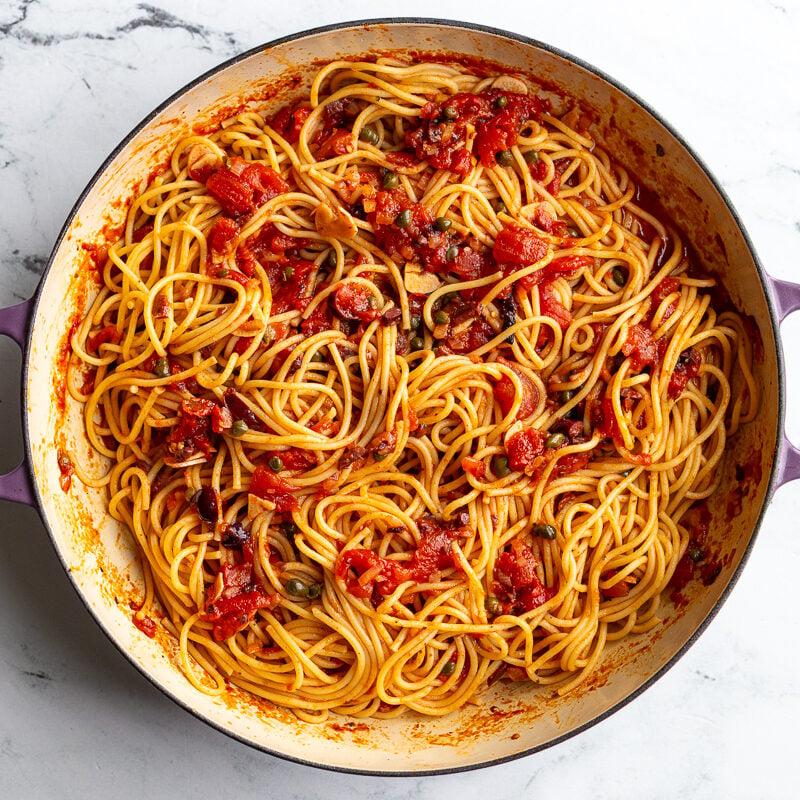
- Toss it all together. The cooked pasta goes straight into the skillet with the sauce, tossing until every strand is coated and glossy. Garnish with fresh herbs and parmesan cheese.
Store leftovers in an airtight container.
Recipe Tips
- Watch the garlic closely – it goes from golden to burnt fast, and burnt garlic will make the whole sauce taste bitter
- Save that pasta water – it’s salty and starchy and helps the sauce cling to the noodles instead of pooling at the bottom of the bowl
- Add anchovies if you eat fish – 2-3 minced fillets with the garlic melt right in and add serious depth
- Boost the protein – stir in a drained can of white beans or chickpeas with the tomatoes
Frequently Asked Questions
It’s an Italian pasta sauce built on pantry ingredients – olives, capers, garlic, and tomatoes. The name has a few colorful (and disputed) origin stories, but the flavor is what’s kept it around.
There’s a kick from the red pepper flakes, but it’s mild – more warm than fiery. Use less if you’re sensitive to heat, or more if you want it to really show up.
Yes – this version is anchovy-free, and the olives and capers bring plenty of salty depth on their own.
Marinara is a straightforward tomato and garlic sauce. Puttanesca builds on that base with olives, capers, and red pepper flakes for a saltier, spicier, more complex flavor.
Easy Pasta Puttanesca Recipe
Video
Ingredients
- 12 ounces spaghetti or linguine
- 2 tablespoons olive oil
- 1 shallot, finely chopped
- 5 cloves garlic, thinly sliced
- ½ teaspoon red pepper flakes
- ½ cup kalamata olives, pitted and roughly chopped
- 3 tablespoons capers, drained
- 1 teaspoon dried oregano
- 1 tablespoon tomato paste
- 28 oz can whole peeled tomatoes
- ½ teaspoon fine sea salt
- ¼ cup fresh parsley or basil, plus more for serving
Instructions
- Bring a large pot of salted water to a boil. Cook 12 ounces spaghetti or linguine according to package directions until al dente. Before draining, scoop out about ½ cup of pasta water and set aside.
- While pasta cooks, heat 2 tablespoons olive oil in a large skillet over medium heat. Add the shallot and cook for 3 minutes until it begins to soften. Add in the garlic, olives, capers, and red pepper flakes and cook, stirring occasionally, until the garlic is golden and fragrant, about 2 minutes. Watch it closely so it doesn’t burn.
- Mix in the tomato paste and cook for 2 minutes. Add 1 can whole peeled tomatoes (28 oz) to the skillet, crushing the tomatoes with a spoon as you go. Stir in the dried oregano and salt. Let everything simmer together for 10–12 minutes until the sauce thickens slightly.
- Add the drained pasta directly to the skillet and toss well to coat, adding splashes of reserved pasta water as needed to loosen the sauce. Stir in half of the herbs. Top with the remaining fresh herbs and enjoy!
Notes
Protein boost: Stir in a drained can of white beans or chickpeas with the tomatoes.
Olive swap: Castelvetrano olives are milder and buttery if kalamatas feel too bold.
Nutrition
Nutrition information is automatically calculated, so should only be used as an approximation.




Thank you for sharing this recipe