

This post may contain affiliate links. Please read our disclosure policy.
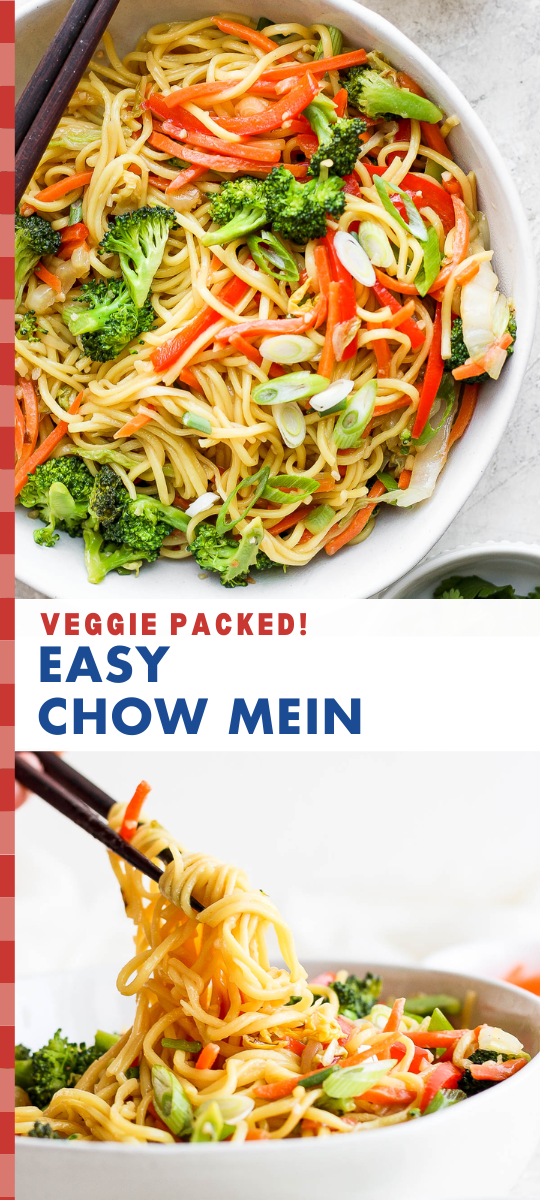
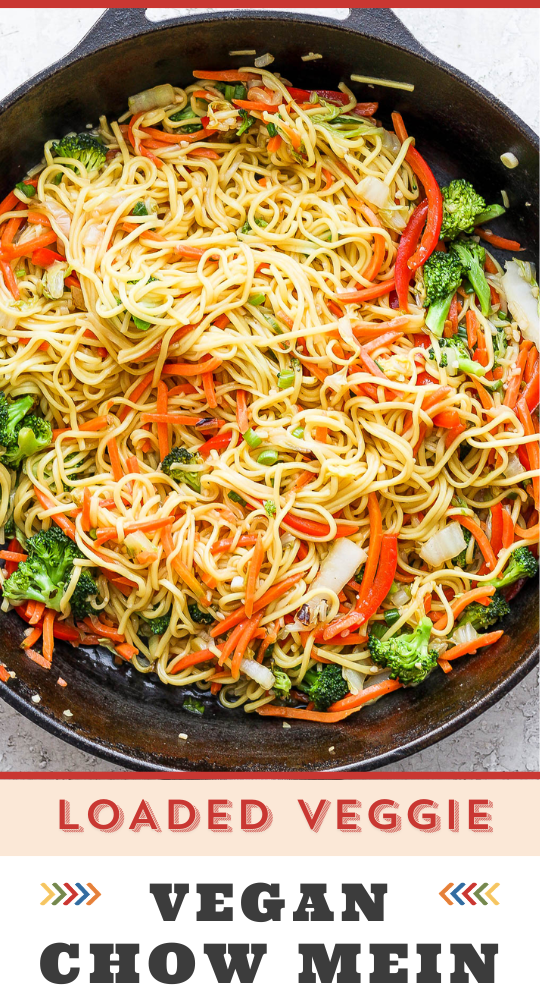
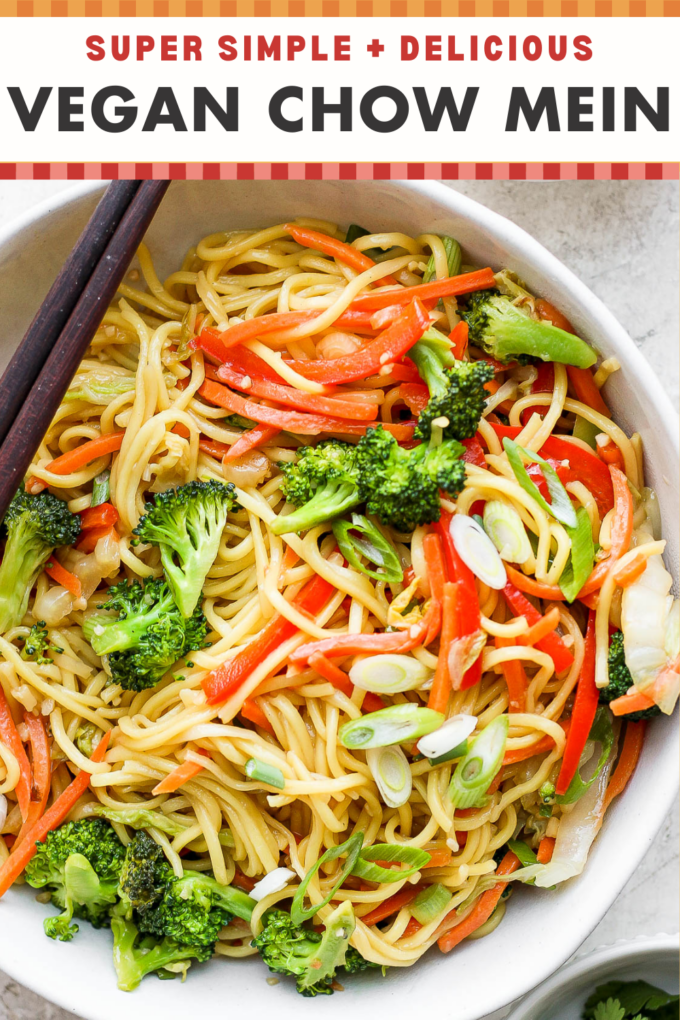
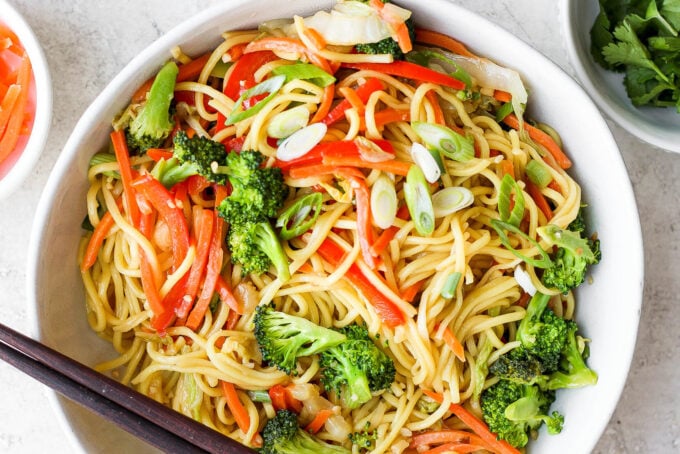
This Vegetable Chow Mein recipe has been in my regular rotation for years – tender noodles, crunchy cabbage, colorful veggies, and a savory sauce that pulls it all together in about 25 minutes. Plus, it comes together almost entirely in one skillet!
Love a good noodle dish? You need to try our Vegan Pad Thai as well as our Easy peanut Noodles, this incredible Tofu Stir Fry recipe and our Easy Homemade Ramen!

Why you’ll love this easy dinner recipe!

Sometimes I just need a quick and easy dinner that also feels healthy and well balanced. This Vegan Chow Mein is exactly that. It’s simple to throw together and packed with veggies.
Why You’ll Love This
- Ready in 25 minutes – genuinely one of the fastest dinners in my lineup
- A true “clean out the fridge” recipe – the veggie swaps are endless
- That sauce though – soy, hoisin, sesame, a little brown sugar – it just works
- Fully vegan and satisfying enough to stand on its own as a meal
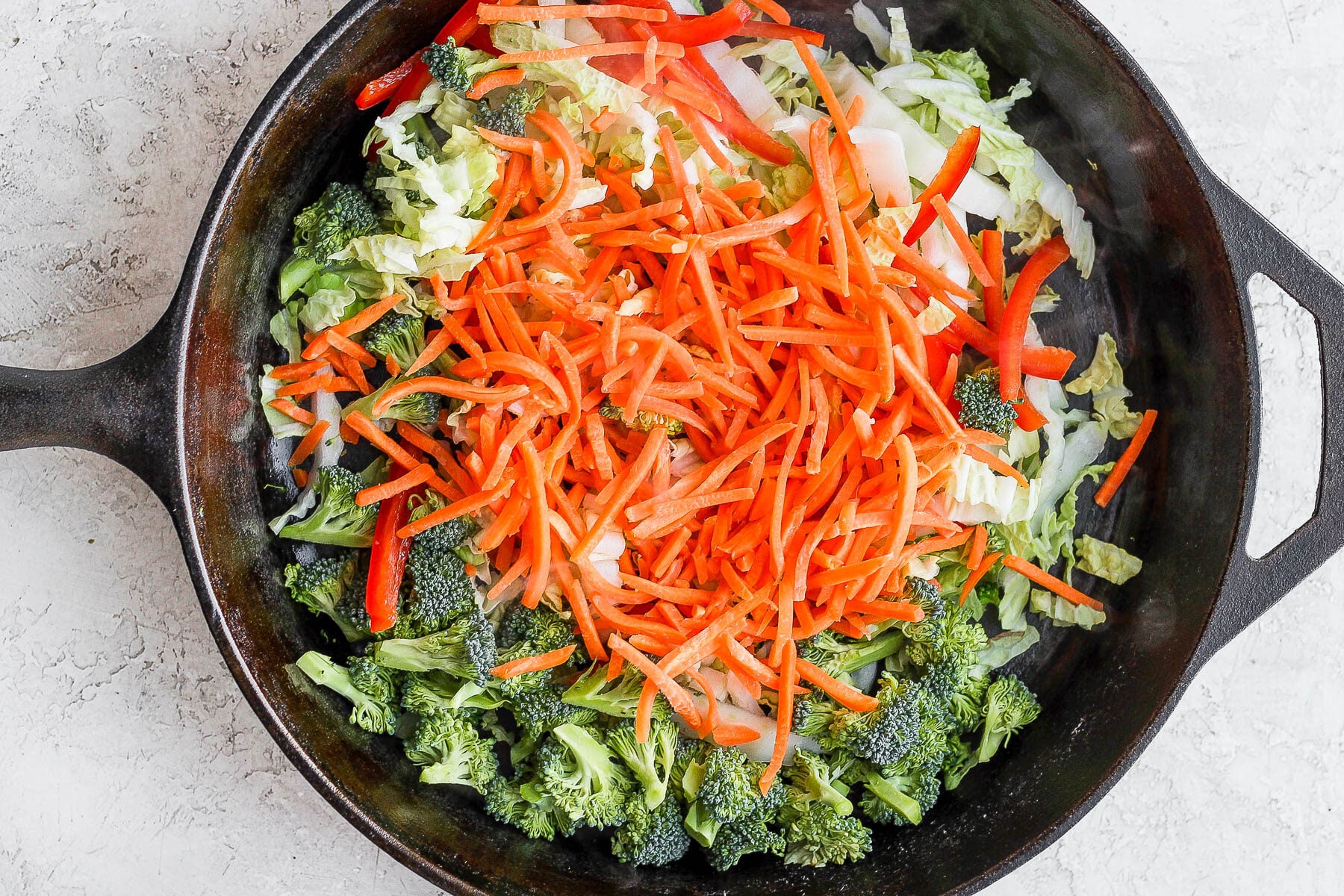
Ingredients needed
The ingredients for this recipe are listed fully down in the recipe card but let’s briefly go over the pantry staples needed including a few substitutions you can make as desired!
- Chow mein noodles – the base of the dish; fresh noodles from a Asian markets are ideal, but refrigerated yakisoba or dry spaghetti work great too.
- Napa cabbage – adds a subtle crunch and soaks up the sauce beautifully; I don’t recommend skipping it.
- Carrots – brings sweetness and color; pre-shredded carrots save time.
- Broccoli – adds substance and a little bite; swap for bok choy or snow peas if you prefer.
- Red bell pepper – for sweetness and color; any color bell pepper works.
- Green onion + garlic – added toward the end so they stay bright and don’t burn.
- Soy sauce – the salty, savory backbone of the sauce; tamari works for gluten-free.
- Hoisin sauce – adds depth and a hint of sweetness; don’t skip this one.
- Rice wine vinegar – brightens everything up; shaoxing wine is the more traditional swap if you have it.
- Brown sugar – just a touch to balance the salt; coconut sugar or maple syrup both work.
- Sesame oil – used both in the sauce and for cooking; toasted sesame oil gives the best flavor.
- Cornstarch – helps the sauce thicken and cling to the noodles.
How to Make It
Just a reminder that you can find the FULL written recipe down in the recipe card, but I want to quickly go over how to make them with visuals for you :)
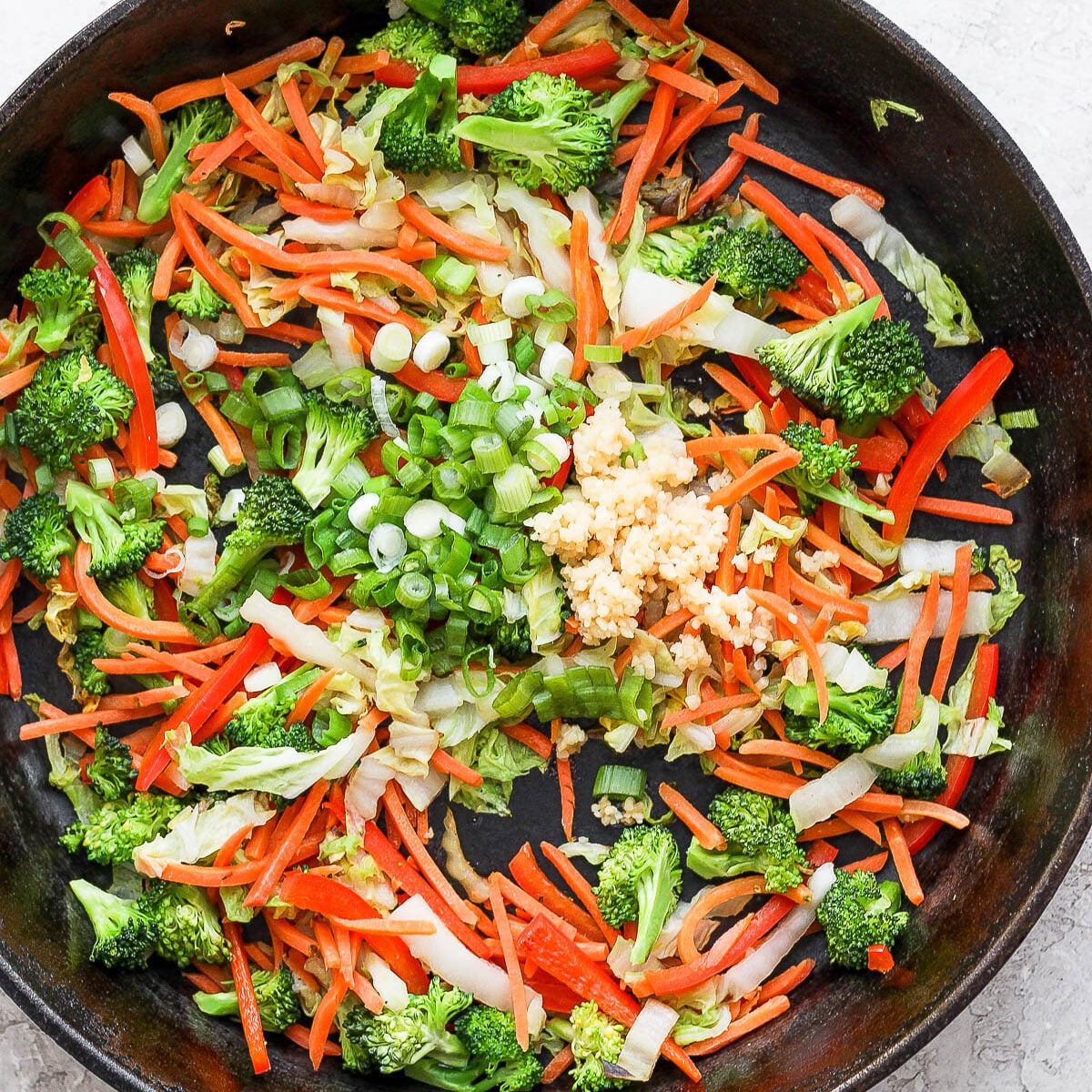
- Cook the veggies. Heat oil in a large skillet or large wok over medium-high heat. Sauté carrots, broccoli, bell pepper, and cabbage for about 5 minutes. Then, add in the green onion and garlic and sauté for 2 additional minutes.
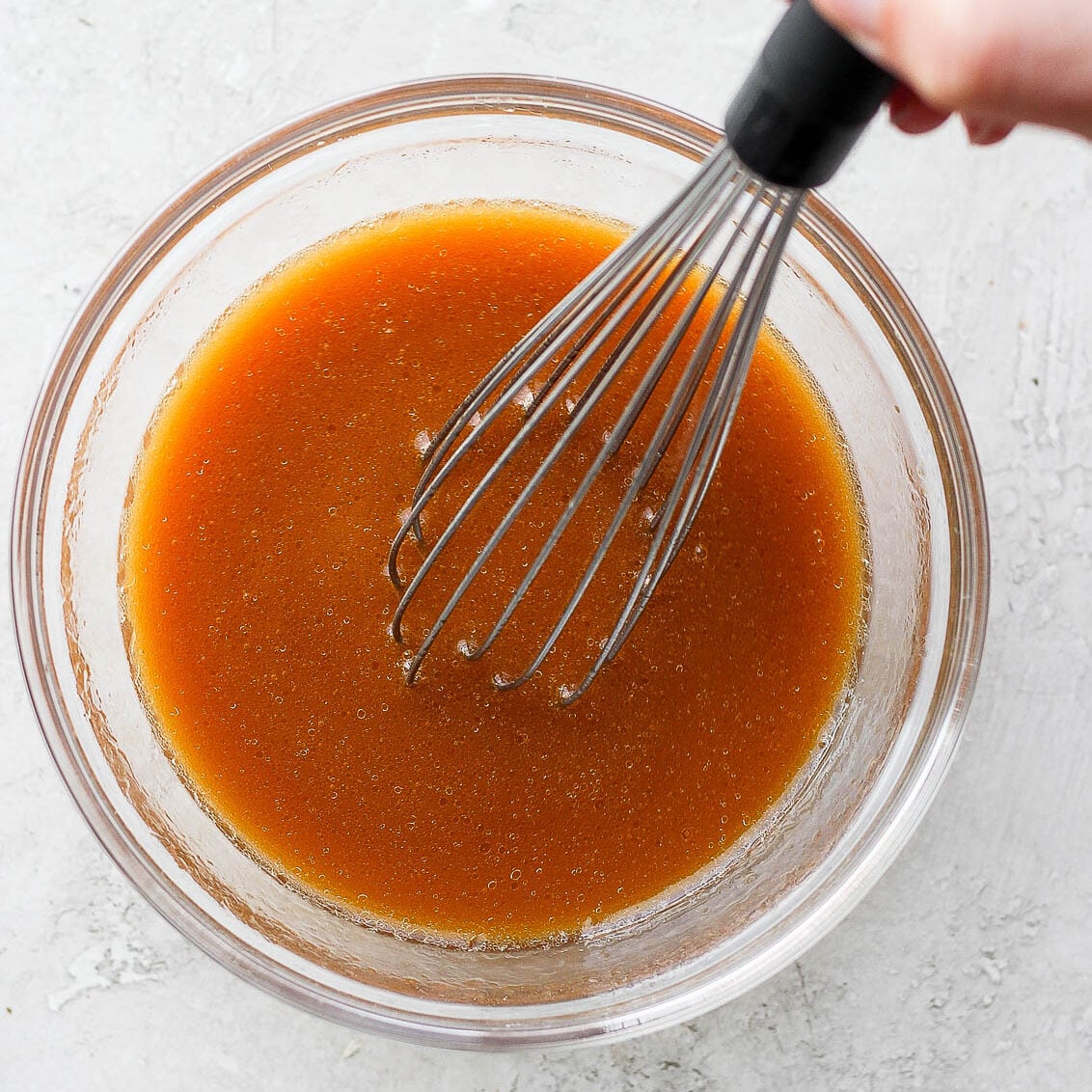
- Cook the noodles and make the sauce. Meanwhile, cook the noodles according to package instructions.
In a small bowl or measuring cup, whisk together all ingredients for the sauce.
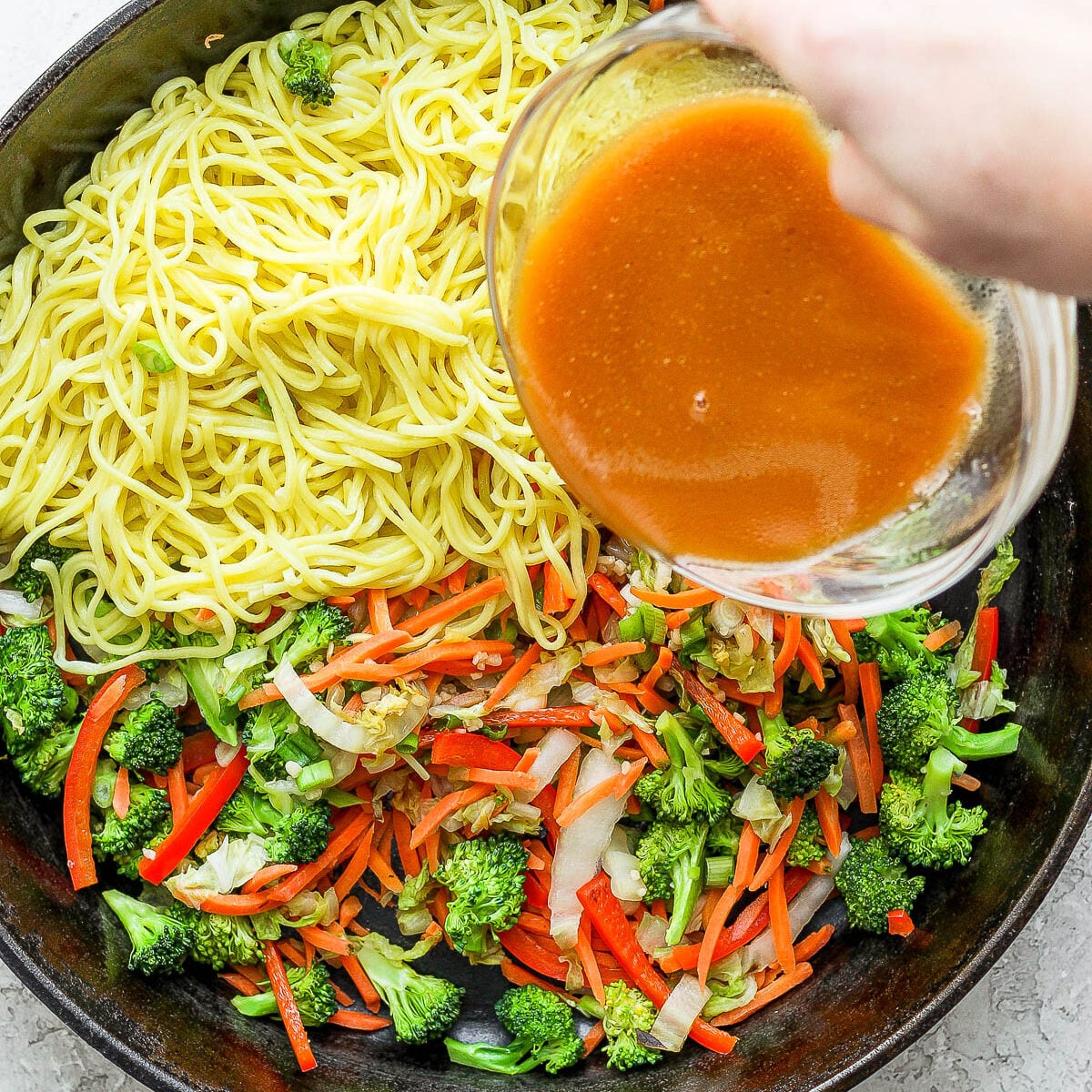
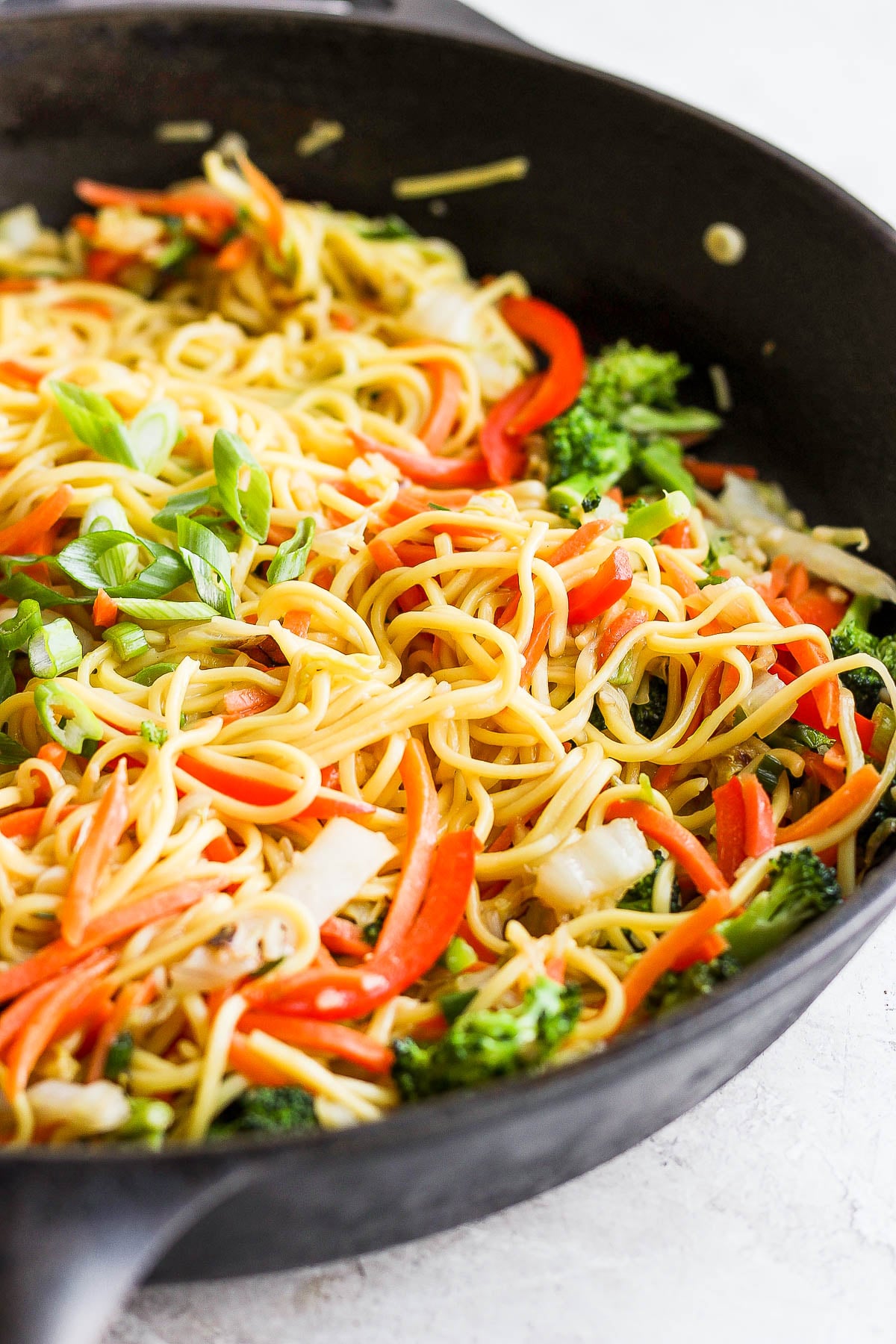
- Add the sauce and noodles. Combine the sauce and noodles with the vegetables and cook for a couple of minutes and until the noodles are reheated and the sauce is thickened and beginning to coat the veggies and noodles.
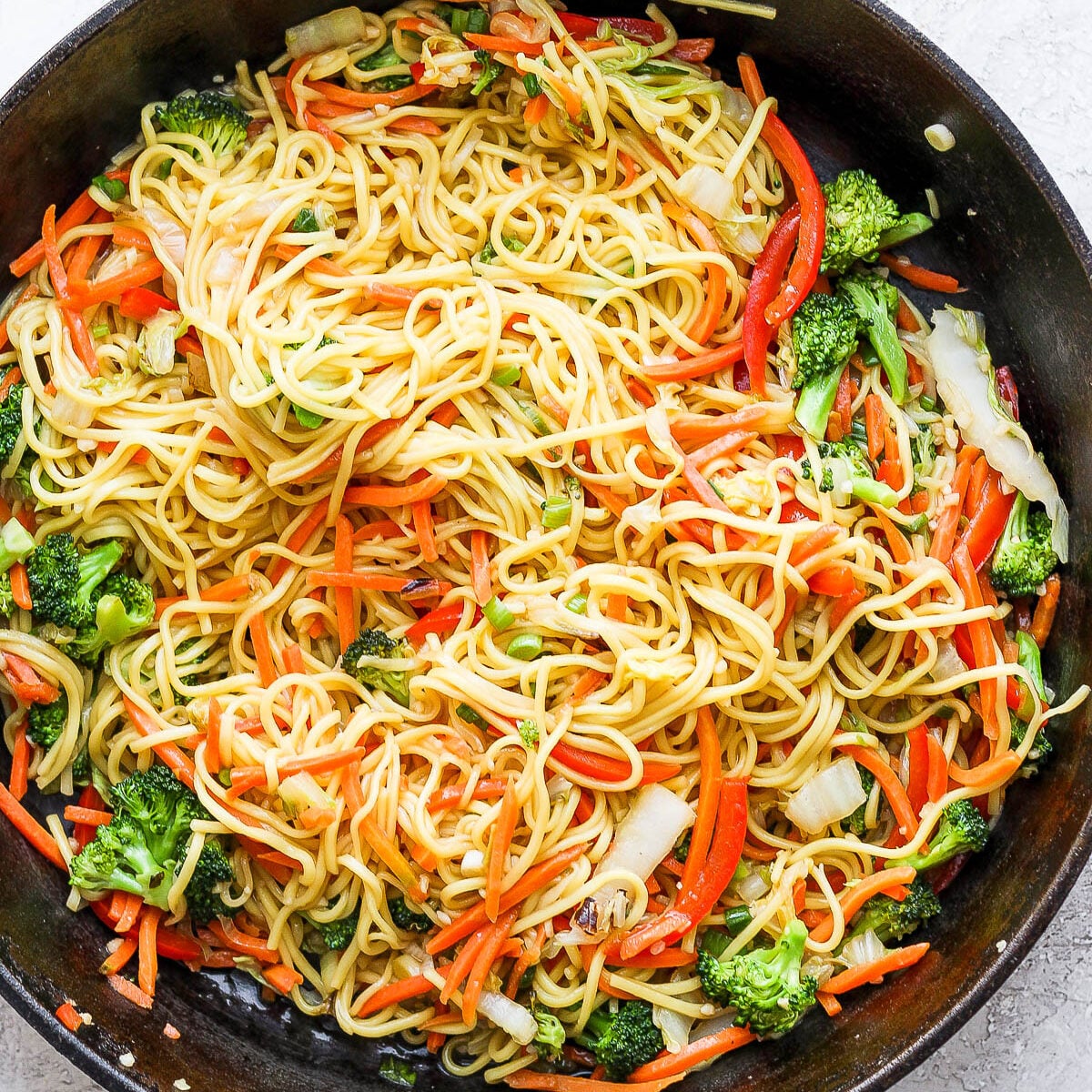
- Finish it off. Remove from the heat and serve with extra green onions, sesame seeds, bean sprouts + any other toppings of choice. Enjoy!
Recipe Tips
- Don’t confuse your noodles. Chow mein noodles and chow mein crispy pieces are sold under the same name – you want the soft noodles, not the crunchy snack version.
- Prep everything before you start. This cooks fast. Have your veggies chopped and sauce whisked before the skillet gets hot.
- Don’t overcook the vegetables. You want them tender but still with some bite – about 5-7 minutes total is right.
- Add protein easily. Crispy tofu is BY FAR the best add-in here – toss it in with the noodles at the end. My tofu guide has everything you need.
- Shaoxing wine upgrade. If you can find Chinese cooking wine, use it in place of the rice vinegar – it adds a more traditional depth of flavor.
Frequently Asked Questions
Chow mein means stir-fried noodles – the sauce is lighter and the noodles have more texture. Lo mein means tossed noodles with a thicker, saucier coating. Both are delicious, but chow mein tends to be a bit drier and more stir-fry style.
Yes! Swap soy sauce for tamari, use gluten-free hoisin, and sub rice noodles or soba noodles (100% buckwheat) for the chow mein noodles.
Refrigerated yakisoba noodles are the closest and easiest to find. Thin spaghetti noodles, soba noodles, or rice noodles all work well too.
Absolutely – crispy tofu is the natural fit here and makes this a complete meal. Edamame is an easy add-in that doesn’t require any extra cooking. If you’re not vegetarian/ vegan, you can throw in some cooked chicken or beef.
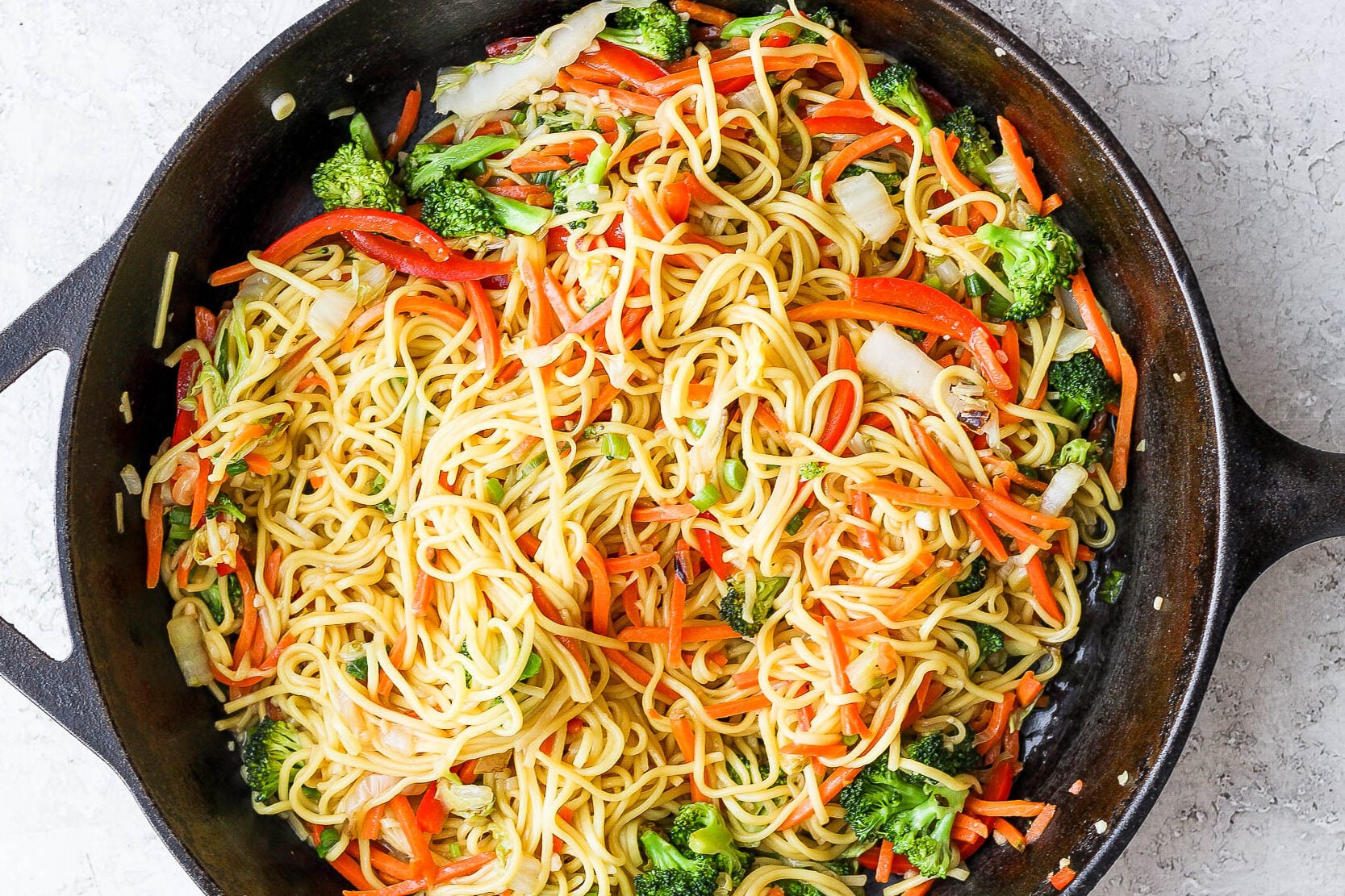
Vegetable Chow Mein
Video
Ingredients
For the sauce
- ½ cup of hot water
- 2 tablespoons soy sauce
- 1 ½ tablespoons hoisin sauce
- 2 teaspoons cornstarch
- 1 ½ tablespoons rice wine vinegar*
- 1 tablespoon brown sugar, can sub in coconut sugar or maple syrup
- 1 teaspoon sesame oil
- Black pepper to taste
For the chow mein
- 1 tablespoon of toasted sesame oil
- 1 cup julienned carrots, about 2 medium carrots
- 1 cup finely chopped broccoli
- ½ red bell pepper, thinly sliced
- 2-3 cups Napa cabbage, finely shredded
- 3 green onions, chopped
- 3 cloves garlic, minced
- 6 oz chow mein noodles*
Instructions
- Cook the noodles according to package directions. Drain and set aside.6 oz chow mein noodles*
- In a bowl or measuring cup, whisk together all ingredients for the sauce.½ cup of hot water, 2 tablespoons soy sauce, 1 ½ tablespoons hoisin sauce, 2 teaspoons cornstarch, 1 ½ tablespoons rice wine vinegar*, 1 tablespoon brown sugar, 1 teaspoon sesame oil, Black pepper to taste
- Meanwhile in a large skillet or wok, heat the sesame oil over medium heat. Once hot, add in the carrots, broccoli, bell pepper, and cabbage. Saute for 5 minutes. Add in the green onion and garlic and saute for 2 additional minutes.1 tablespoon of toasted sesame oil, 1 cup julienned carrots, 1 cup finely chopped broccoli, ½ red bell pepper, 2-3 cups Napa cabbage, 3 green onions, 3 cloves garlic
- Add the sauce and noodles into the skillet and toss to combine. Continue to cook for about 2-3 minutes until the noodles are reheated and the sauce is thickened and beginning to coat the veggies and noodles. Remove from heat and ENJOY!
Notes
- Noodles – Make sure you’re buying chow mein noodles and not chow mein crispy pieces – they’re sold under the same name and it’s easy to grab the wrong one. Yakisoba noodles, thin spaghetti, or soba noodles all work as substitutes. If vegan is a priority, check the label since some brands contain egg.
- Rice wine vinegar – Shaoxing wine is the more traditional choice here and worth using if you can find it. Rice wine vinegar is a solid everyday substitute.
- Add protein – Crispy tofu is the move. Toss it in with the noodles at the end. See my tofu guide if you need a starting point.
Nutrition
Nutrition information is automatically calculated, so should only be used as an approximation.





love it.